
Blog
SoftWave for Jumper's Knee: Patellar Tendon Pain in Basketball and Volleyball

Winter court season is right around the corner.
Basketball tryouts. Volleyball club season. Open gyms, rec leagues, and those late-night pickup games that leave you sore for two days.
It is also when we start seeing a lot of a very specific complaint: pain just below the kneecap that flares every time the athlete jumps, lands, or heads down a flight of stairs.
That is often jumper's knee, and if it is not managed well, it can drag on for an entire season or longer.
What Jumper's Knee Is
Jumper's knee is the common name for patellar tendinopathy, irritation and breakdown of the patellar tendon, the thick band that connects the bottom of your kneecap to your shinbone.
That tendon is part of the system that straightens your knee and, just as importantly, absorbs force when you land. Every jump, every hard stop, every deep knee bend loads it heavily.
When the tendon gets loaded faster than it can adapt, the collagen fibers become disorganized and the tissue gets sensitive and weaker. Like many tendon problems, it is usually less about acute inflammation and more about a tendon that has fallen behind on its repair.
Who Gets It
- Basketball and volleyball players, by far the most common
- Track athletes in jumping events
- Soccer players, especially with lots of sprinting and cutting
- CrossFit and box jump fans
- Teen athletes going through growth spurts while training heavily
- Adults returning to court sports after time away
Signs It Is Your Patellar Tendon
- Pain right at the bottom of the kneecap, at a spot you can point to
- Pain when jumping, landing, or decelerating
- Pain with stairs, especially going down
- Pain after sitting for a long time with knees bent
- Pain that warms up during activity, then feels worse afterward and the next morning
That "warms up" pattern is what keeps athletes playing through it until the tendon is significantly irritated.
Why Rest Alone Does Not Fix It
This frustrates a lot of athletes. They rest for two weeks, the pain fades, they go back to playing, and it comes right back.
Here is why: rest calms the pain, but it does not rebuild the tendon. A tendon that has not been progressively loaded is actually less prepared for jumping after rest than it was before. Tendons get stronger when they are challenged the right way.
How SoftWave Helps the Tendon
SoftWave Tissue Regeneration Technology uses broad-focused, electrohydraulic acoustic waves to stimulate tissue at a cellular level. It is FDA cleared and non-invasive. There are no needles, no medications, and no downtime.
For jumper's knee, SoftWave can help:
- Improve blood flow to a tendon that needs better circulation to heal
- Modulate inflammation so the tissue can shift from irritated to repairing
- Activate the body's own repair cells, helping restart a stalled healing process
- Reduce pain early, which makes it easier to do the strength work that keeps it from coming back
Because SoftWave covers a broad area, we can treat the patellar tendon along with the quadriceps tendon and surrounding tissues that are often involved.
Do not let jumper's knee wreck your season. Schedule a SoftWave consultation online. Coaches can also learn about our team program at camaratachiropractic.com/sports.
The Loading Plan
A good jumper's knee plan rebuilds the tendon progressively. It usually moves through stages:
- Isometrics. Holding a wall sit or a mid-range leg extension for 30 to 45 seconds can calm tendon pain for many athletes and is often the starting point.
- Slow, heavy strength. Exercises like slow squats, leg press, and split squats build tendon capacity over weeks.
- Energy storage work. Gradual reintroduction of hopping, skipping, and jumping.
- Sport-specific return. Building back to full jumping, cutting, and game play.
A useful rule: some discomfort during exercise is acceptable if it settles within 24 hours and the tendon does not feel worse the next morning.
Chiropractic: Fixing How Force Travels
Jumper's knee is often a symptom of how an athlete moves.
Stiff ankles force the knee to absorb more during landing. Weak or restricted hips let the knee collapse inward. A stiff pelvis or low back changes how the whole leg loads.
Chiropractic care at Camarata Chiropractic & Wellness evaluates and restores motion through the ankles, knees, hips, pelvis, and spine, so landing forces are shared across the whole leg instead of concentrated in one tendon.
We also look at landing mechanics. Teaching athletes to land softly with knees tracking over toes takes pressure off the tendon every single jump.
Smart Training Adjustments
- Reduce jump volume temporarily, especially in practice
- Avoid deep knee bends under load until symptoms settle
- Do not stop training completely; stay active with cycling or upper-body work
- Track symptoms the morning after practice
- Be careful with sudden increases in training after breaks
Recovery Matters Too
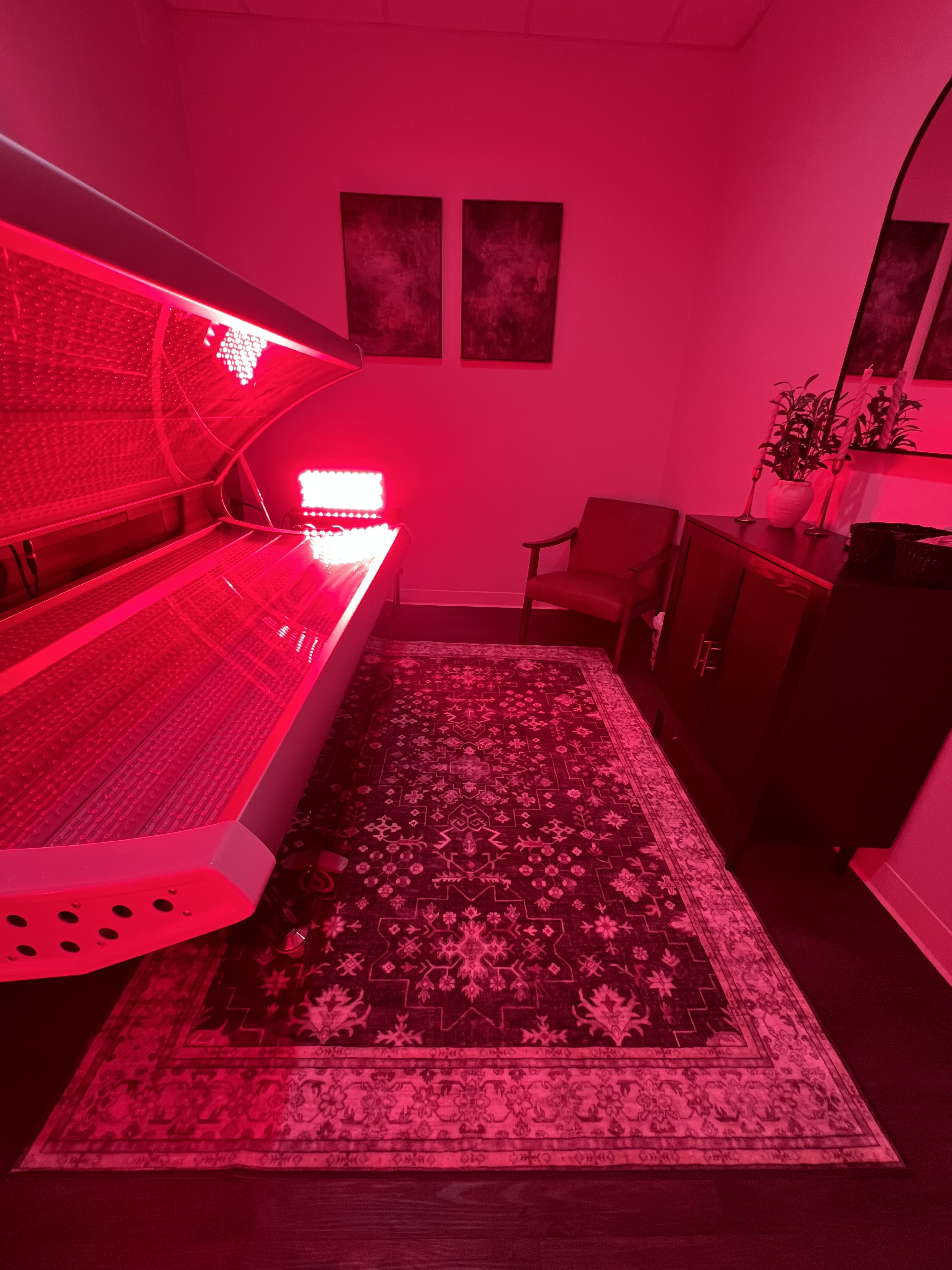
Sleep, nutrition, and recovery all affect how tendons adapt. Many of our athletes also add full-body Red Light Therapy on our Trifecta Pro 450 during the season as an extra recovery tool.
When to Get It Checked Promptly
- A pop below the kneecap followed by inability to straighten the leg
- Significant swelling after an injury
- Knee locking, catching, or giving way
- Pain in a teen at the bump below the knee that is very swollen or tender, which may be Osgood-Schlatter and needs a tailored approach
Keep Jumping
Jumper's knee is one of the most common court-sport injuries, and one of the most manageable when you treat the tissue and rebuild it properly.
Learn more about SoftWave at www.NaturalHealingROC.com. We help basketball, volleyball, and court athletes across North Chili, Chili, Churchville, Spencerport, and greater Rochester stay off the bench.
Get a Hold of Us
If you are ready to move better, feel better, and recover faster, our team at Camarata Chiropractic & Wellness is here to help.
New Patient Scheduler Online Here!
Camarata Chiropractic & Wellness
3237 Union Street
North Chili, NY 14514
Follow Us:
Facebook: Camarata Chiropractic & Wellness
Instagram: @camarata_chiro
‹ Back
Recent Posts
-
-
World Spine Day: Five Daily Habits for a Healthier Spine
October 16, 2026
-
-
-
SoftWave for Shin Splints: Help for Cross Country and Fall Runners
October 10, 2026


 3237 Union St, North Chili, NY 14514

 (585) 617-4145