

Blog
Can Spinal Misalignments Cause Whole-Body Symptoms?
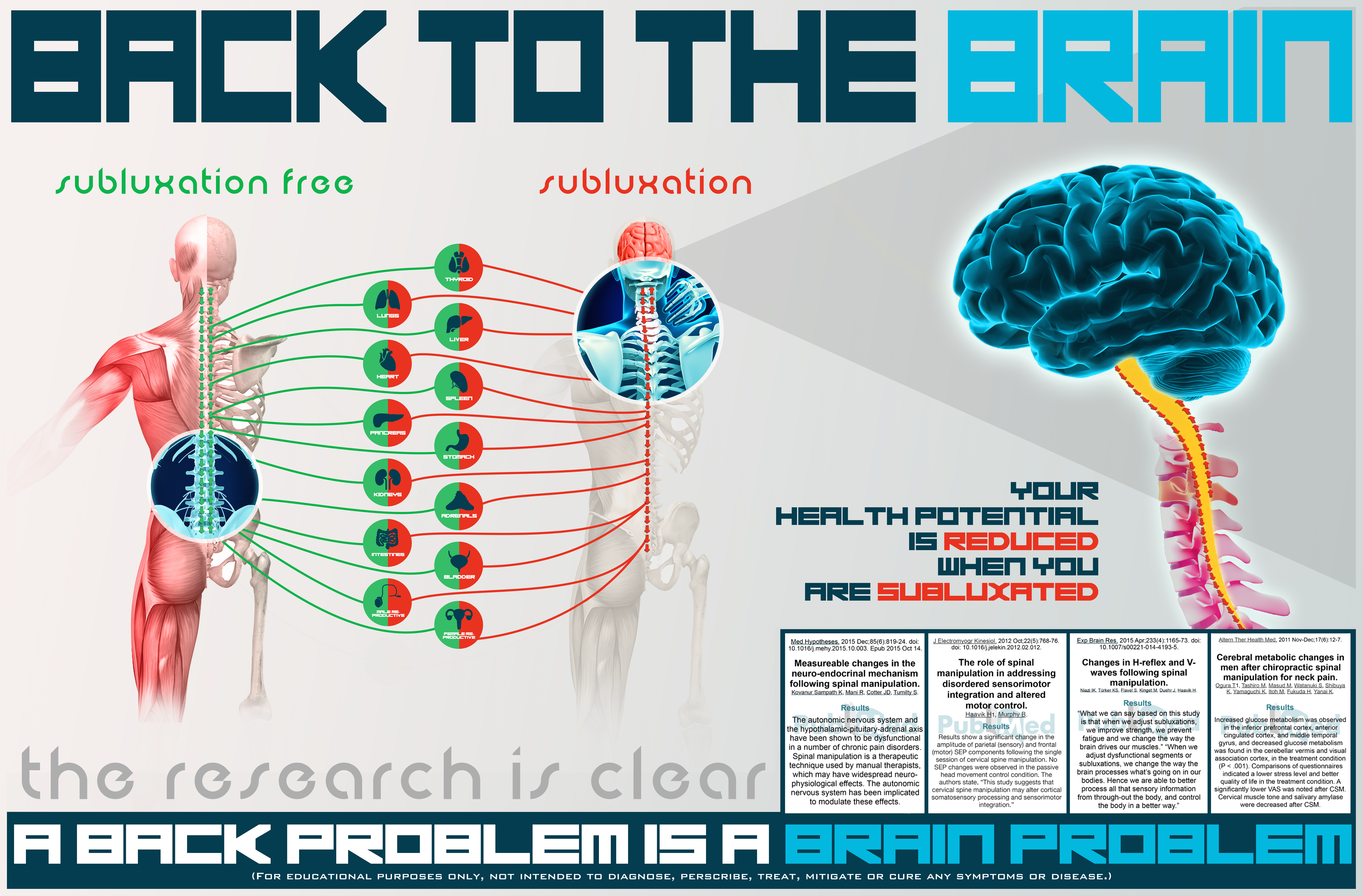
Understanding the Spine–Nervous System Connection
Short answer: spinal dysfunction can influence whole-body function, especially through its impact on the nervous system.
Your spine is not just a structural support system. It plays a critical role in how your brain and body communicate. When spinal function is altered, it can affect how your body moves, adapts, and regulates itself.
The Spine and the Nervous System: Why It Matters
Your spine protects the central nervous system, which includes the brain and spinal cord. This system controls and coordinates virtually every function in your body, including:
- Movement and coordination
- Muscle activation and stability
- Pain perception
- Organ function
- Hormonal and stress responses
Every second, your body is sending and receiving information through the nervous system. The spine plays a key role in facilitating this communication.
When spinal joints are not moving properly, it can change the quality of those signals.
What Is the Vertebral Subluxation Complex?
The Vertebral Subluxation Complex is a concept used in chiropractic to describe changes that occur when spinal segments are not functioning optimally.
This may involve:
- Altered joint motion
- Muscle imbalances
- Changes in neural signaling
- Local tissue irritation
Rather than thinking of it as a bone “out of place,” it is more accurate to view it as a neuro-biomechanical dysfunction that affects how the body functions as a whole.
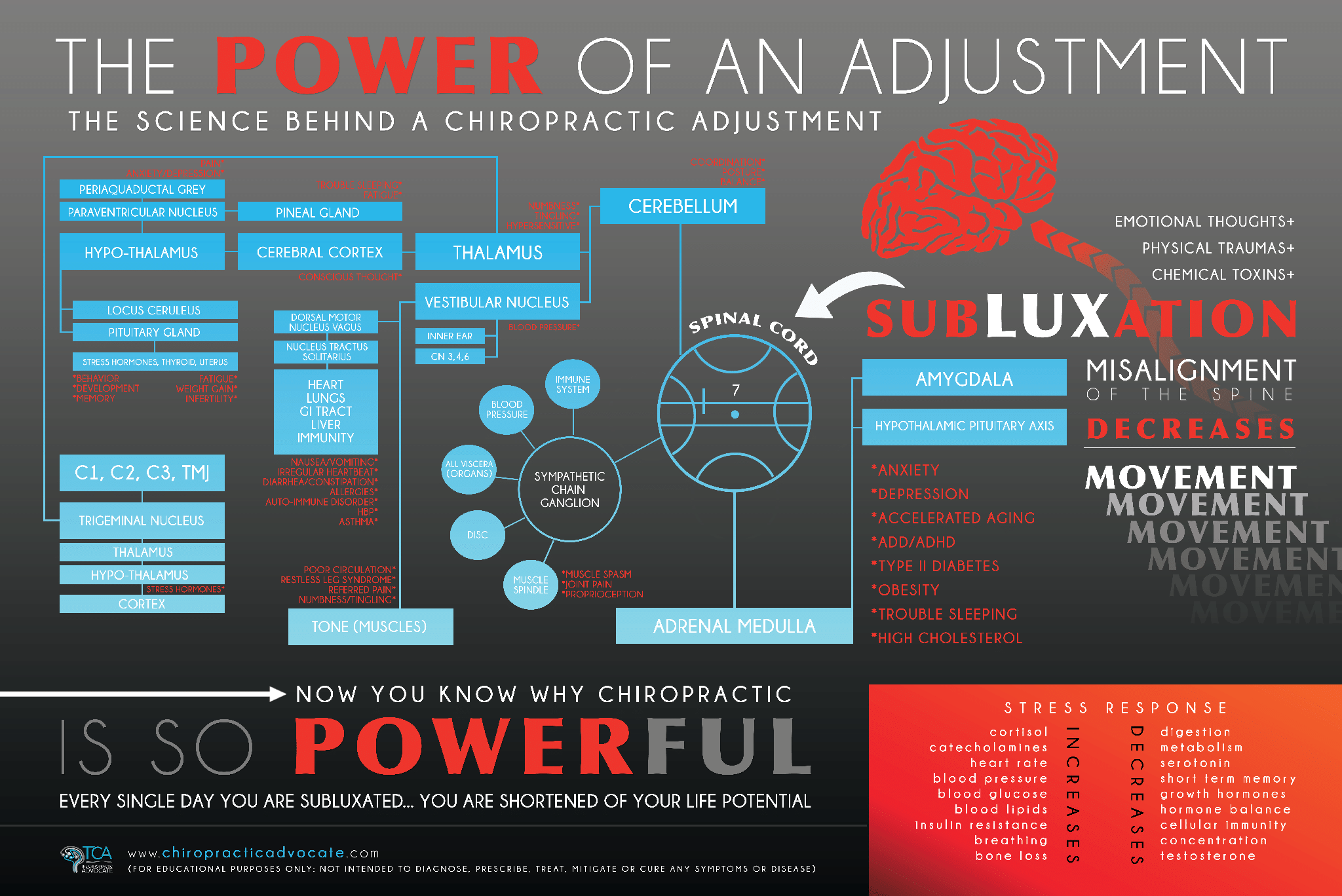
How Spinal Dysfunction Can Influence the Body
1. Altered Communication Between Brain and Body
Your spine contains a high density of sensory receptors that constantly send information to your brain about position, movement, and load.
When joints are restricted or moving abnormally:
- The brain receives altered input
- Movement patterns can change
- Coordination and stability may be affected
Over time, this can lead to compensation patterns throughout the body.
2. Changes in Muscle Function and Movement Patterns
Spinal dysfunction can influence how muscles activate and coordinate.
This may result in:
- Muscle tightness or inhibition
- Imbalances between muscle groups
- Reduced efficiency in movement
These changes can contribute to:
- Chronic tension
- Joint stress
- Increased risk of injury
3. Impact on the Autonomic Nervous System
The autonomic nervous system controls functions such as:
- Heart rate
- Digestion
- Breathing patterns
- Stress response
When the nervous system is under stress, the body may shift into a more dominant “fight-or-flight” state.
This can lead to:
- Increased muscle tension
- Reduced recovery capacity
- Poor sleep quality
- Heightened sensitivity to pain
4. Changes in Pain Processing
Pain is not just a local issue, it is processed and interpreted by the brain.
Altered input from the spine can influence:
- How pain signals are perceived
- Sensitivity of the nervous system
- The persistence of chronic pain
This helps explain why pain can sometimes continue even after tissue healing has occurred.
5. Effects on Adaptation and Recovery
Your body is constantly adapting to physical, chemical, and emotional stress.
When spinal function is compromised:
- Adaptation may become less efficient
- Recovery may slow down
- The body may rely on compensation instead of correction
Over time, this can contribute to more widespread dysfunction.
Can Spinal Dysfunction Cause Whole-Body Symptoms?
When the nervous system is not communicating efficiently, it can influence multiple systems in the body.
This may present as:
- Persistent or recurring pain
- Muscle tightness or imbalance
- Reduced mobility
- Fatigue
- Stress-related symptoms
Health is always multifactorial, but the spine and nervous system play a central role in that equation.
A Whole-Body Perspective on Health
At Camarata Chiropractic & Wellness, we look beyond symptoms and focus on how the entire system is functioning.
We consider:
- Structural alignment and movement
- Nervous system regulation
- Lifestyle factors such as posture, activity, and recovery
- Stress and overall load on the body
The goal is not simply to reduce pain, but to improve how your body functions and adapts over time.
Why This Matters for You
If your spine and nervous system are not functioning properly, your body may:
- Move inefficiently
- Compensate in ways that create additional stress
- Struggle to fully recover
When function improves:
- Movement becomes more efficient
- Tension decreases
- The body can regulate and heal more effectively
Final Thoughts
The spine is more than a structural framework. It is a key part of your body’s communication system.
While spinal dysfunction may not directly cause every condition, it can influence how your body functions, adapts, and responds to stress.
Addressing spinal health is an important step toward improving overall performance, resilience, and long-term wellness.
Get a Hold of Us
Camarata Chiropractic & Wellness
3237 Union St, North Chili, NY 14514
Phone: 585-617-4145
Email: info@camaratachiropractic.com
Facebook: https://www.facebook.com/camaratachiropractic
Instagram: https://www.instagram.com/camarata_chiro/
New Patient Scheduler Online Here!

The information provided in this article is for educational and informational purposes only and is not intended as medical advice. Content shared on this website is not meant to diagnose, treat, cure, or prevent any condition. Individual health needs and circumstances vary. Always consult with your healthcare provider or speak with our team at Camarata Chiropractic & Wellness before making changes to your health, nutrition, hydration, exercise, or lifestyle routines.
‹ Back
Recent Posts
-

-
-

Your Child's First Chiropractic Visit: What Parents Can Expect
August 26, 2026
-

Red Light Therapy vs Tanning Beds: What Is Actually Different
August 22, 2026
-


 3237 Union St, North Chili, NY 14514
 (585) 617-4145