

Blog
Poor Sleep = More Pain: The Hidden Connection Most People Overlook
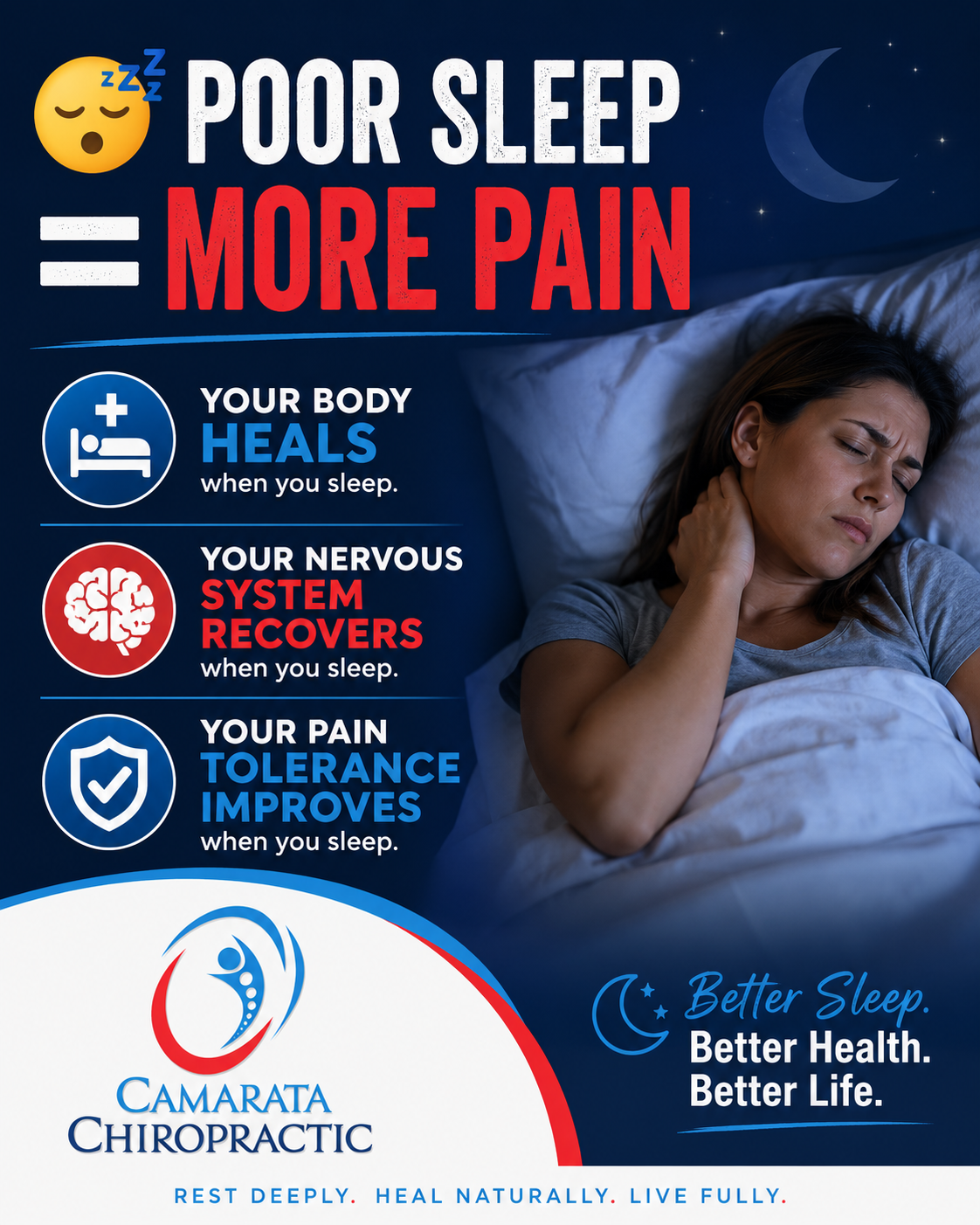
Did You Know Poor Sleep Can Increase Pain Sensitivity?
If you've been dealing with neck pain, back pain, headaches, joint pain, muscle tension, arthritis, inflammation, or chronic pain, there's one factor that may be making everything worse:
Poor sleep.
Many people think pain causes poor sleep, and while that's true, the opposite is also true:
Poor sleep can increase pain.
Research continues to show that sleep and pain have a two-way relationship. The less quality sleep you get, the more sensitive your nervous system becomes to pain signals. Over time, this can create a frustrating cycle where pain disrupts sleep and poor sleep amplifies pain.
The result?
You hurt more.
You recover slower.
You feel more exhausted.
And your body struggles to heal efficiently.
Why Sleep Matters for Healing
Sleep is not simply a period of rest.
Sleep is when your body performs some of its most important repair and recovery processes.
During quality sleep, your body:
-
Repairs damaged tissues
-
Produces growth hormone
-
Regulates inflammation
-
Supports immune function
-
Recharges the brain and nervous system
-
Consolidates memory and learning
-
Balances hormones
-
Restores energy production
Think of sleep as your body's overnight maintenance and repair crew.
Without enough quality sleep, those repair processes become less efficient.
How Poor Sleep Changes Pain Processing
Pain isn't just something that happens in muscles and joints.
Pain is processed by the brain and nervous system.
When sleep is inadequate, several changes occur:
Increased Nervous System Sensitivity
Lack of sleep can make the nervous system more reactive.
Normal aches and pains may feel more intense.
Minor injuries may feel more significant.
Areas of tension may become more noticeable.
This phenomenon is often referred to as increased pain sensitivity or lowered pain threshold.
Increased Inflammation
Poor sleep has been linked to elevated inflammatory markers throughout the body.
Inflammation plays a major role in many common conditions, including:
-
Arthritis
-
Tendonitis
-
Neck pain
-
Back pain
-
Joint pain
-
Muscle soreness
-
Chronic pain syndromes
When inflammation rises, pain often follows.
Reduced Recovery Capacity
Your body repairs tissue damage during sleep.
Without adequate sleep:
-
Muscles recover slower
-
Injuries take longer to heal
-
Workouts become harder to recover from
-
Pain lingers longer
This is one reason athletes prioritize sleep as one of their most powerful recovery tools.
Common Signs Poor Sleep May Be Affecting Your Pain
Many people don't realize sleep is contributing to their symptoms.
Some warning signs include:
-
Waking up tired despite spending enough time in bed
-
Frequent nighttime awakenings
-
Increased pain in the morning
-
Midday energy crashes
-
Brain fog
-
Increased stress levels
-
Muscle tightness
-
Slower recovery after exercise
-
Recurring headaches
-
Difficulty concentrating
If several of these sound familiar, your sleep quality may deserve more attention.
The Sleep-Pain Cycle
One of the biggest challenges patients face is the sleep-pain cycle.
It often looks like this:
Pain → Poor Sleep → Increased Pain → Worse Sleep → More Pain
Over time, this cycle can become self-perpetuating.
Breaking that cycle often requires addressing both the physical causes of pain and the factors affecting sleep quality.
What We See Clinically
In our office, patients who prioritize sleep often experience:
-
Faster healing
-
Better chiropractic outcomes
-
Reduced pain levels
-
Improved mobility
-
Better energy
-
Improved mood
-
Better stress resilience
-
Improved exercise recovery
While sleep alone isn't the answer to every health problem, it is often one of the most overlooked pieces of the puzzle.
How to Improve Sleep Naturally
1. Maintain a Consistent Sleep Schedule
Your brain thrives on routine.
Try to go to bed and wake up at approximately the same time every day.
2. Limit Screen Exposure Before Bed
Blue light from phones, tablets, and televisions can interfere with melatonin production.
Aim to reduce screen time 30-60 minutes before bedtime.
3. Create a Cool, Dark Sleep Environment
Most people sleep best in a cool, quiet, dark room.
Consider blackout curtains and reducing ambient light.
4. Regulate Your Nervous System
Stress is one of the biggest sleep disruptors.
Try:
-
Box breathing
-
Physiological sigh breathing
-
Prayer and meditation
-
Journaling
-
Light stretching
Calming the nervous system often improves sleep quality dramatically.
5. Move Your Body Daily
Regular movement helps regulate sleep patterns.
Walking, strength training, mobility work, and exercise can all improve sleep quality when performed consistently.
6. Support Your Spine and Nervous System
The spine protects the nervous system, which controls every function in the body, including sleep regulation, recovery, and healing.
Reducing physical stress on the body and improving nervous system function may help support better sleep and overall recovery.
Sleep Is One of the Most Powerful Recovery Tools Available
People often search for the perfect supplement, treatment, or recovery gadget.
Yet one of the most powerful healing tools available is completely free:
Quality sleep.
Your body heals when you sleep.
Your nervous system recovers when you sleep.
Your pain tolerance improves when you sleep.
The better you sleep, the better your body can perform the work of healing, recovery, and regeneration.
If you're struggling with recurring pain, don't just ask:
"What's causing my pain?"
Also ask:
"How well am I sleeping?"
The answer may be more important than you think.
Get a Hold of Us
Camarata Chiropractic & Wellness
3237 Union Street
North Chili, NY 14514
www.CamarataChiropractic.com
www.NaturalHealingROC.com
Follow Us:
Facebook: Camarata Chiropractic & Wellness
Instagram: @camarata_chiro
Helping our community heal naturally, move better, recover faster, and live healthier through chiropractic care, SoftWave Tissue Regeneration Technology, Red Light, recovery services, and wellness-focused care.
New Patient Scheduler Online Here!

‹ Back
Recent Posts
-
-
-
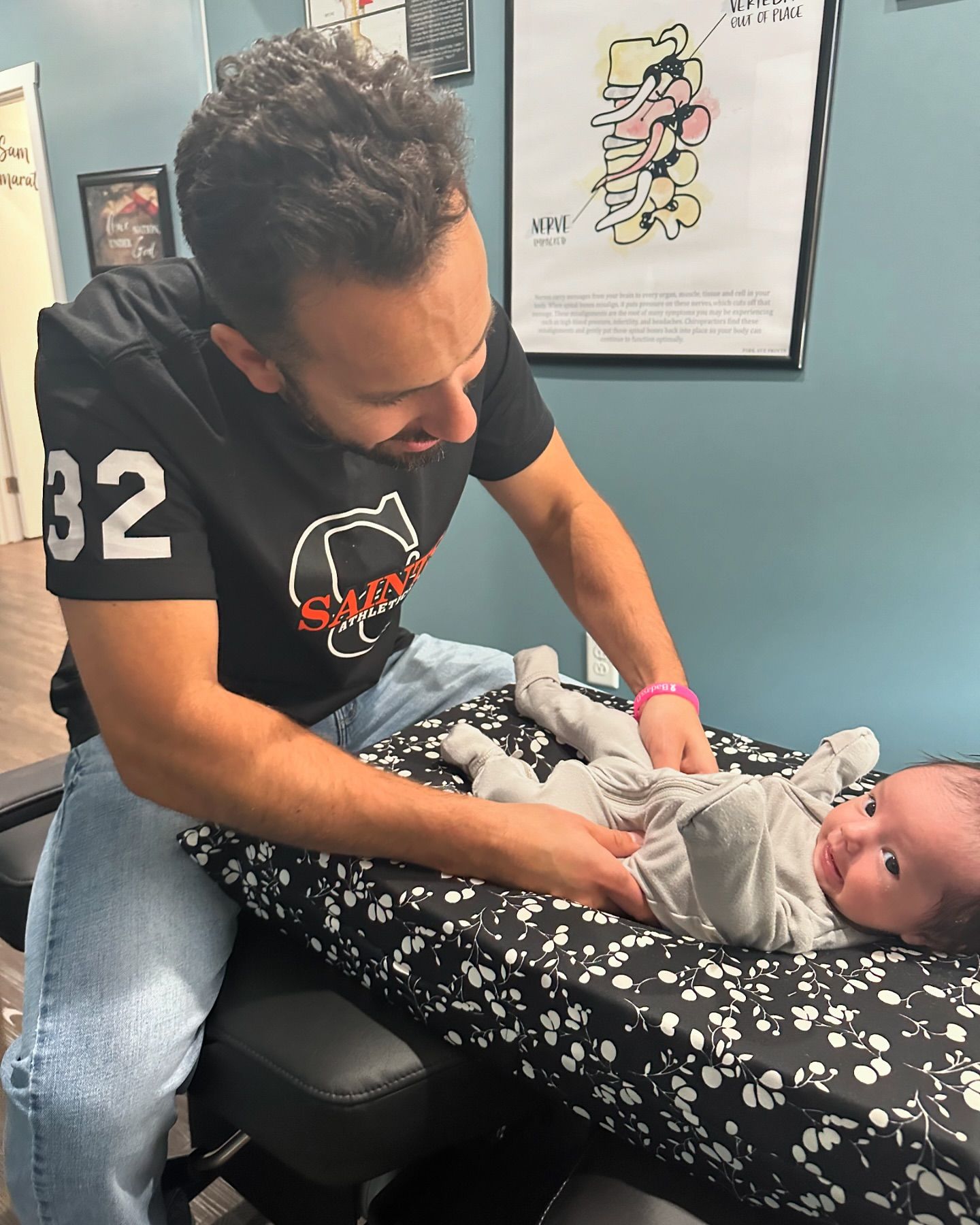
Your Child's First Chiropractic Visit: What Parents Can Expect
August 26, 2026
-

Red Light Therapy vs Tanning Beds: What Is Actually Different
August 22, 2026
-


 3237 Union St, North Chili, NY 14514
 (585) 617-4145