
Blog
The Physiological Sigh: One of Dr. Sam’s Favorite Breathing Exercises to Reset the Nervous System Naturally
In today’s fast-paced world, most people are unknowingly stuck in a chronic state of stress.
Between work, screens, social media, poor sleep, emotional stress, chronic pain, inflammation, busy schedules, and constant overstimulation, the nervous system rarely gets a chance to truly slow down and recover.
That’s where intentional breathing techniques can become incredibly powerful.
One of Dr. Sam Camarata’s favorite breathing exercises to quickly ground, center, and regulate the mind and body is called the Physiological Sigh.
Simple.
Fast.
Powerful.
Science-backed.
And the best part? You always have access to it.
At Camarata Chiropractic & Wellness in North Chili, NY, we are passionate about helping people improve not only their structural health and physical performance, but also their nervous system function and overall well-being. Breathing exercises are one of the most underrated tools for improving stress resilience, recovery, focus, healing, and mental clarity.
What Is the Physiological Sigh?
The Physiological Sigh is a natural breathing pattern your body already uses instinctively to regulate stress and improve oxygen exchange.
You’ve probably done it without realizing it:
- After crying
- During moments of emotional release
- After stress
- Before calming down
- When finally relaxing after tension
Researchers and neuroscientists have studied this breathing pattern because of its powerful effects on the nervous system.
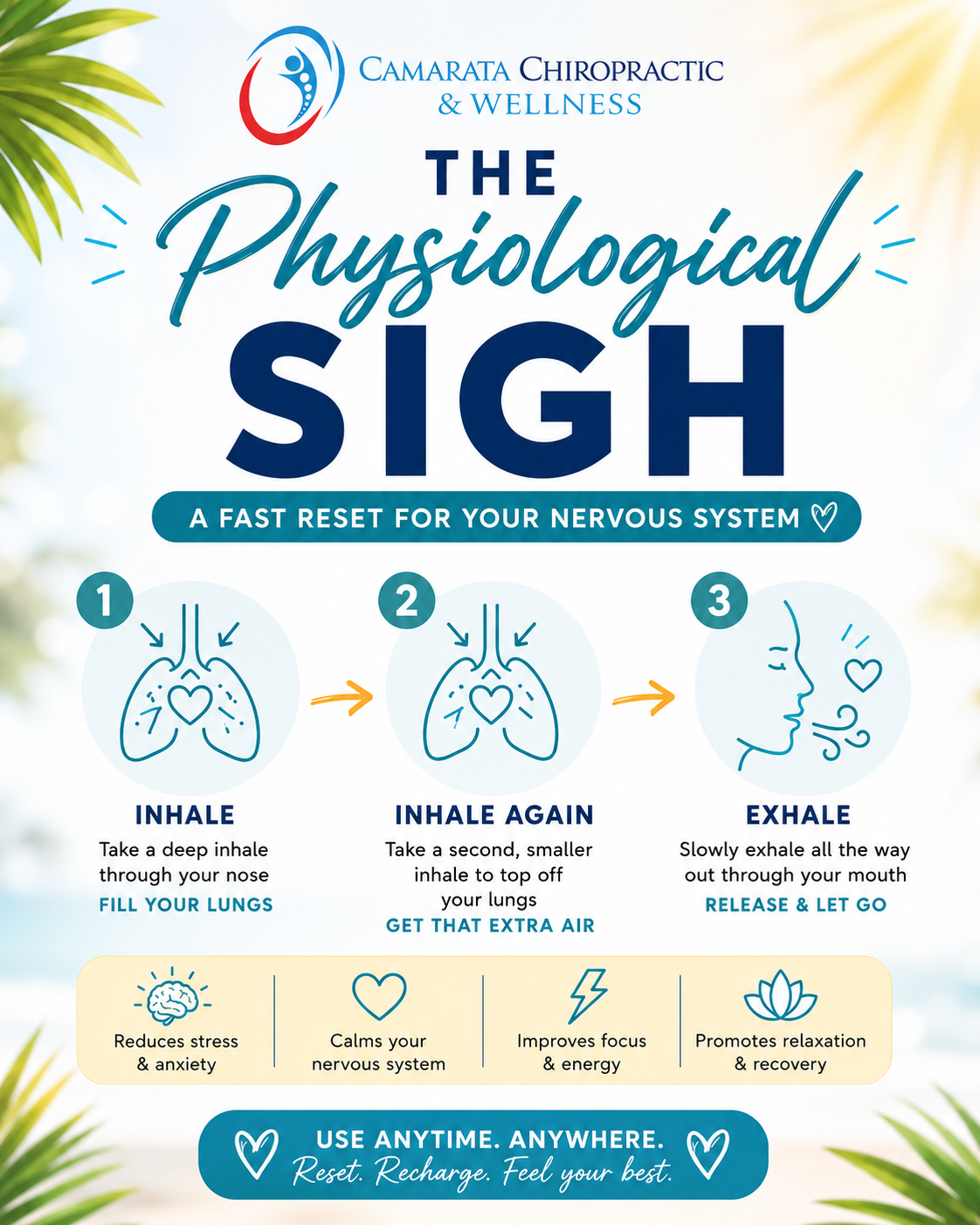
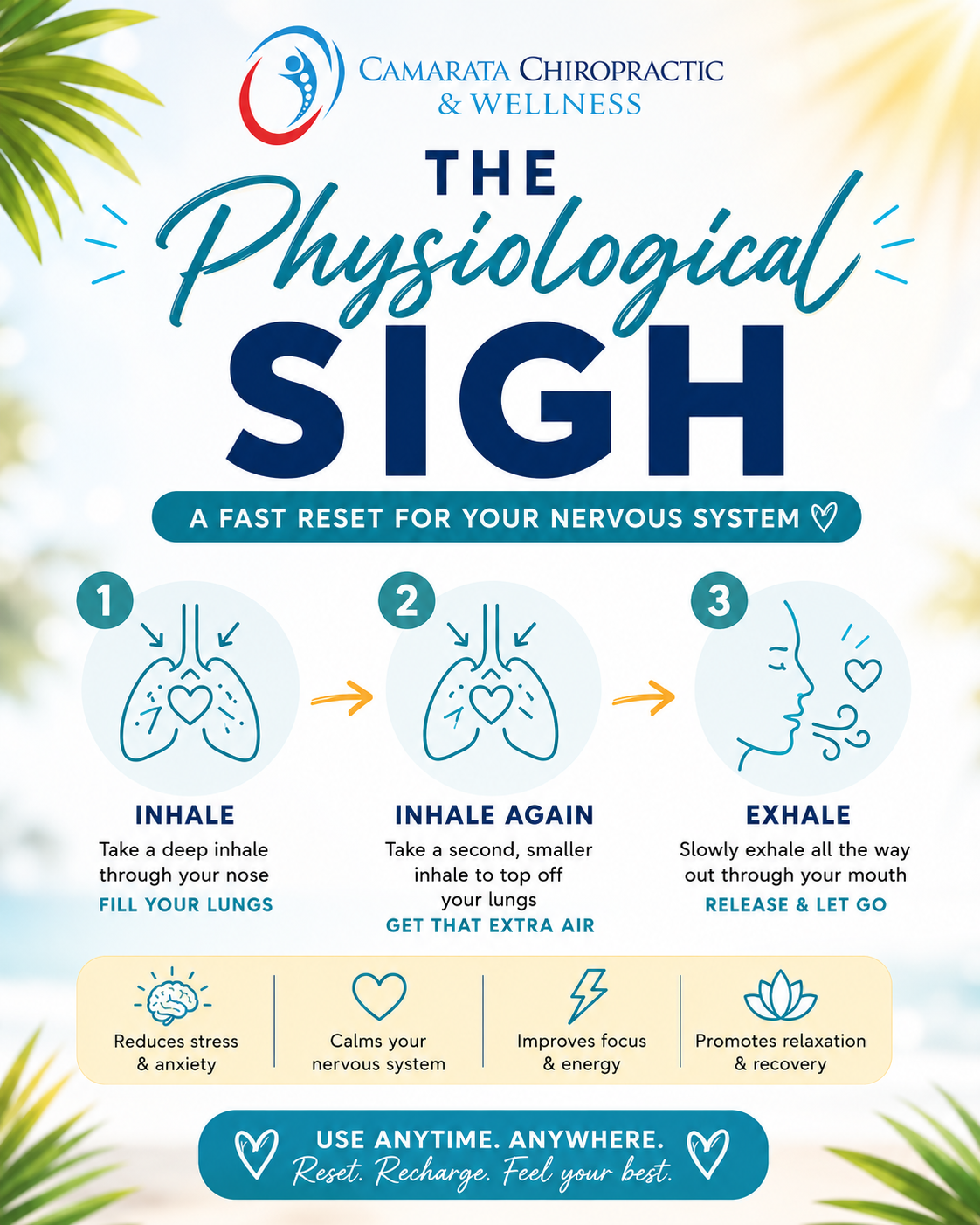
The exercise consists of:
- A deep inhale through the nose
- A second smaller inhale through the nose to fully inflate the lungs
- A long, slow exhale through the mouth
That’s it.
This simple technique can help rapidly reduce stress, lower physiological arousal, and shift the body into a calmer, more regulated state.
Why the Physiological Sigh Works
The Physiological Sigh works because it directly influences the autonomic nervous system.
Your autonomic nervous system has two major branches:
- Sympathetic nervous system = fight or flight
- Parasympathetic nervous system = rest, digest, heal, recover
Most people today are spending far too much time in sympathetic dominance:
- High stress
- Elevated tension
- Poor sleep
- Anxiety
- Chronic inflammation
- Digestive issues
- Brain fog
- Tight muscles
- Shallow breathing
- Increased pain sensitivity
Intentional breathing helps stimulate the parasympathetic nervous system and activate the vagus nerve, which plays a major role in calming the body.
The long exhale phase of the Physiological Sigh is especially important because extended exhalation helps slow heart rate and promote relaxation.
The second inhale also helps reopen tiny air sacs in the lungs called alveoli, improving oxygen exchange and helping the body release excess carbon dioxide.
Dr. Sam’s Favorite Times to Use the Physiological Sigh
Dr. Sam frequently utilizes this breathing technique throughout the day as a quick mental and physical reset.
Some of his favorite times to use it include:
- Before seeing patients
- Between stressful moments
- During busy workdays
- Before workouts
- During prayer or meditation
- Before sleep
- While driving
- During moments of overwhelm
- After difficult conversations
- During recovery and grounding sessions
It’s one of the quickest ways to become more present and reconnect the mind and body.
Benefits of the Physiological Sigh
Many people notice immediate improvements after just a few rounds.
Potential benefits include:
- Reduced stress and anxiety
- Improved nervous system regulation
- Better focus and mental clarity
- Improved emotional regulation
- Lower muscle tension
- Better oxygenation
- Improved breathing awareness
- Reduced feelings of overwhelm
- Improved recovery
- Enhanced mind-body connection
- Increased feelings of calmness
- Improved resilience to stress
Many patients are surprised how much better they feel after only 30-60 seconds of intentional breathing.
The Modern Stress Epidemic
One of the biggest problems in modern society is that people rarely slow down enough to regulate their nervous system.
Many individuals are operating in survival mode every single day.
Signs your nervous system may be overloaded include:
- Constant tension
- Neck tightness
- Shallow chest breathing
- Jaw clenching
- Digestive issues
- Difficulty relaxing
- Poor sleep
- Brain fog
- Fatigue
- Anxiety
- Feeling “wired but tired”
- Chronic pain flare-ups
The body was never designed to stay in fight-or-flight mode 24/7.
Breath work provides a natural, free, and accessible way to interrupt that stress cycle.
Why Breathing Matters More Than Most People Realize
Breathing affects nearly every system in the body:
- Brain function
- Heart rate
- Blood pressure
- Stress hormones
- Muscle tension
- Sleep quality
- Recovery
- Athletic performance
- Mental clarity
- Emotional regulation
- Energy levels
Most people breathe shallowly into their upper chest all day long without realizing it.
This can reinforce stress patterns and poor nervous system regulation.
Intentional breathing exercises like the Physiological Sigh help restore healthier breathing mechanics and improve awareness of how the body responds to stress.
Combining Breath Work with Chiropractic and Wellness Care
At Camarata Chiropractic & Wellness, we believe true healing involves more than just treating symptoms.
Your nervous system controls and coordinates every function in the body.
That’s why we combine:
- Chiropractic care
- SoftWave Therapy
- Red light therapy
- Mobility and posture correction
- Nutrition guidance
- Recovery strategies
- Stress management tools
- Breath work education
The Physiological Sigh is one of many tools we encourage patients to incorporate into their daily wellness routine.
When combined with proper movement, sleep, hydration, recovery, mindset, and nervous system care, breathing exercises can become a powerful part of a healthier lifestyle.
How Many Rounds Should You Do?
A great place to start is:
- 3-5 rounds
- 1-3 times per day
- Especially during stressful moments
Many people notice an immediate shift in their stress levels and mental state.
Consistency is key.
Like exercise, the benefits compound over time.
Final Thoughts
The Physiological Sigh may be one of the simplest wellness tools available, yet one of the most powerful.
In a world full of stress, overstimulation, and nervous system overload, learning how to intentionally regulate your breathing can make a massive difference in how you feel physically, mentally, and emotionally.
Sometimes the body doesn’t need another stimulant.
Sometimes it simply needs a reset.
And your breath may be the fastest pathway there.
Get a Hold of Us
Camarata Chiropractic & Wellness
3237 Union St, North Chili, NY 14514
Phone: 585-617-4145
Email: info@camaratachiropractic.com
Facebook: https://www.facebook.com/camaratachiropractic
Instagram: https://www.instagram.com/camarata_chiro/
New Patient Scheduler Online Here!
Frequently Asked Questions About the Physiological Sigh
What is the Physiological Sigh breathing technique?
The Physiological Sigh is a breathing exercise involving two inhales through the nose followed by one long exhale through the mouth. It is designed to help calm the nervous system and reduce stress quickly.
How often should I do the Physiological Sigh?
Most people benefit from practicing 3-5 rounds several times per day, especially during stressful situations or before sleep.
Can breathing exercises help anxiety naturally?
Yes. Breathing exercises can help regulate the nervous system, improve oxygenation, and reduce physiological stress responses associated with anxiety.
Is the Physiological Sigh backed by science?
Yes. Researchers and neuroscientists have studied the Physiological Sigh for its ability to rapidly reduce stress and regulate breathing patterns.
Can breath work help improve sleep?
Many people find that calming breathing exercises before bed help relax the nervous system and improve sleep quality.
Does chiropractic care help the nervous system?
Chiropractic care focuses on improving spinal motion, posture, movement, and nervous system function, which helps support overall health and well-being in the body.
What are the best breathing exercises for stress?
Some popular breathing exercises include:
- Physiological Sigh
- Box Breathing
- Alternating Nostril Breathing
- 4-7-8 Breathing
- Diaphragmatic Breathing
- Cyclic Sighing
Where can I learn more about holistic wellness and nervous system health in Rochester, NY?
Visit Camarata Chiropractic & Wellness, Natural Healing ROC and Red Light Rochester to learn more about our chiropractic, SoftWave Therapy, Red Light Therapy, recovery, and wellness services in the Rochester and North Chili community.
The information provided in this article is for educational and informational purposes only and is not intended as medical advice. Content shared on this website is not meant to diagnose, treat, cure, or prevent any condition. Individual health needs and circumstances vary. Always consult with your healthcare provider or speak with our team at Camarata Chiropractic & Wellness before making changes to your health, nutrition, hydration, exercise, or lifestyle routines.
‹ Back
Recent Posts
-
-
-

SoftWave for Shin Splints: Help for Cross Country and Fall Runners
October 10, 2026
-
-


 3237 Union St, North Chili, NY 14514
 (585) 617-4145