

Blog
Your Energy Problem Might Not Be Your Schedule, It Might Be Your Mitochondria

Many people assume low energy, slow recovery, brain fog, and declining performance are simply the result of getting older, being too busy, or not getting enough sleep.
But in many cases, the real issue begins much deeper.
It starts inside your cells.
More specifically, it starts inside structures called mitochondria.
These microscopic structures are responsible for producing the energy that powers nearly every function in the human body. When mitochondrial health declines, energy production drops, recovery slows, and the body struggles to adapt to physical and mental stress.
Understanding how mitochondria work, and how to support them, may be one of the most important concepts in modern health, recovery, and performance.
What Are Mitochondria?
Mitochondria are often referred to as the “powerhouses of the cell.”
Their primary role is to convert oxygen and nutrients into a molecule called ATP (adenosine triphosphate). ATP is the energy currency that fuels nearly every biological process in the body.
This includes:
-
Muscle contraction
-
Brain signaling and focus
-
Hormone regulation
-
Immune function
-
Tissue repair and regeneration
-
Metabolism and fat burning
-
Athletic performance and recovery
Your body contains trillions of cells, and each one depends on mitochondria to generate the energy required to function properly.
Organs and tissues with high energy demands, such as the brain, heart, and muscles, contain the highest concentrations of mitochondria.
When mitochondria are functioning efficiently, the body has the energy it needs to perform, recover, and adapt.
When mitochondrial function declines, the opposite occurs.
What Happens When Mitochondrial Function Declines?
Over time, a variety of stressors can impair mitochondrial function.
These include:
-
Chronic inflammation
-
Poor nutrition
-
Lack of exercise
-
Poor sleep quality
-
Chronic stress
-
Environmental toxins
-
Aging and metabolic dysfunction
When mitochondria become less efficient, the body produces less ATP.
This can lead to symptoms such as:
-
Persistent fatigue
-
Brain fog and poor concentration
-
Slower injury recovery
-
Decreased physical performance
-
Increased inflammation
-
Hormonal imbalances
-
Poor metabolic health
For many individuals, these symptoms are not isolated issues. They are signs that the body’s energy production systems are underperforming.
The Powerful Concept of Mitochondrial Biogenesis
One of the most fascinating aspects of human physiology is that the body has the ability to create new mitochondria.
This process is known as mitochondrial biogenesis.
Mitochondrial biogenesis occurs when cells receive specific biological signals that encourage the production of new mitochondrial structures. In simple terms, the body builds more energy factories inside the cells.
More mitochondria means:
-
Greater energy production
-
Improved metabolic efficiency
-
Better recovery from physical stress
-
Enhanced resilience and adaptation
This adaptive process is one of the reasons the human body becomes stronger and more efficient in response to training, recovery strategies, and healthy lifestyle habits.
What Stimulates Mitochondrial Biogenesis?
The body increases mitochondrial production when it experiences the right types of stress and recovery signals. These signals tell the body that it needs to become more efficient at producing energy.
Several key factors are known to stimulate mitochondrial biogenesis.
Exercise and Strength Training
Physical activity is one of the most powerful stimulators of mitochondrial growth.
When muscles contract during exercise, the body increases its demand for ATP. In response, cells adapt by creating more mitochondria to improve future energy production.
Both endurance training and resistance training play a role in supporting mitochondrial function.
Nutrient-Dense Nutrition
Mitochondria require a variety of vitamins, minerals, and nutrients to function properly.
Nutrients such as magnesium, B vitamins, amino acids, and antioxidants support mitochondrial respiration and energy production. Diets rich in whole foods, healthy fats, quality protein, and colorful vegetables help support this process.
Sleep and Circadian Rhythm
During sleep, the body performs essential repair and recovery processes. Mitochondrial repair and cellular regeneration are heavily influenced by circadian rhythms.
Poor sleep disrupts these processes and reduces the body’s ability to restore cellular energy systems.
Strategic Stress and Recovery
Short-term physiological stress followed by proper recovery can stimulate mitochondrial adaptation. Examples include exercise, heat exposure, and other controlled stressors that challenge the body.
When applied correctly, these stressors trigger beneficial cellular responses that strengthen the body over time.
Technologies That Support Cellular Energy
Emerging therapies are also being used to support mitochondrial health.
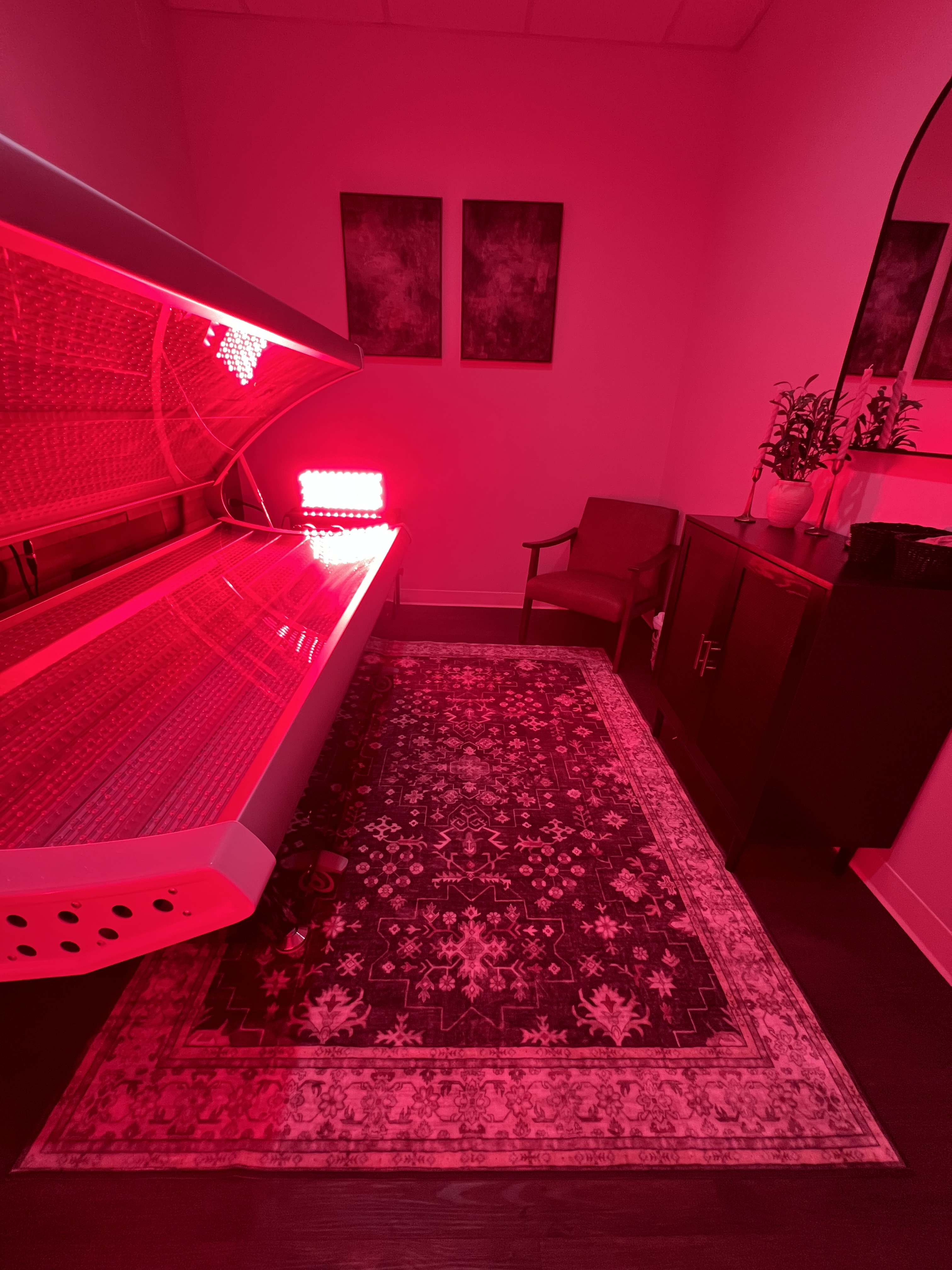
One example is red light therapy, which has been studied for its ability to support mitochondrial respiration by interacting with enzymes involved in cellular energy production.
These therapies are often used alongside movement, nutrition, and recovery strategies to support overall cellular function.
Why Cellular Energy Matters for Health and Performance
Modern healthcare often focuses on treating symptoms rather than addressing the underlying physiological systems that drive those symptoms.
But many common health challenges, fatigue, slow recovery, poor resilience, and declining performance, can be linked back to how well the body produces and manages energy at the cellular level.
When mitochondrial health improves, people often experience improvements in:
-
Energy levels
-
Mental clarity
-
Recovery speed
-
Exercise capacity
-
Metabolic efficiency
-
Overall resilience to stress
Rather than simply managing symptoms, improving mitochondrial function supports the body’s natural ability to adapt and regenerate.
Supporting Cellular Health at Camarata Chiropractic & Wellness
At Camarata Chiropractic & Wellness in North Chili, New York, our approach focuses on supporting the body’s natural healing and recovery processes from the inside out.
Many of our therapies and wellness strategies are designed to support cellular health, nervous system function, and recovery capacity.
These include:
-
Chiropractic care to improve nervous system communication
-
Movement and mobility strategies to support adaptation
-
Red light therapy to support mitochondrial function
-
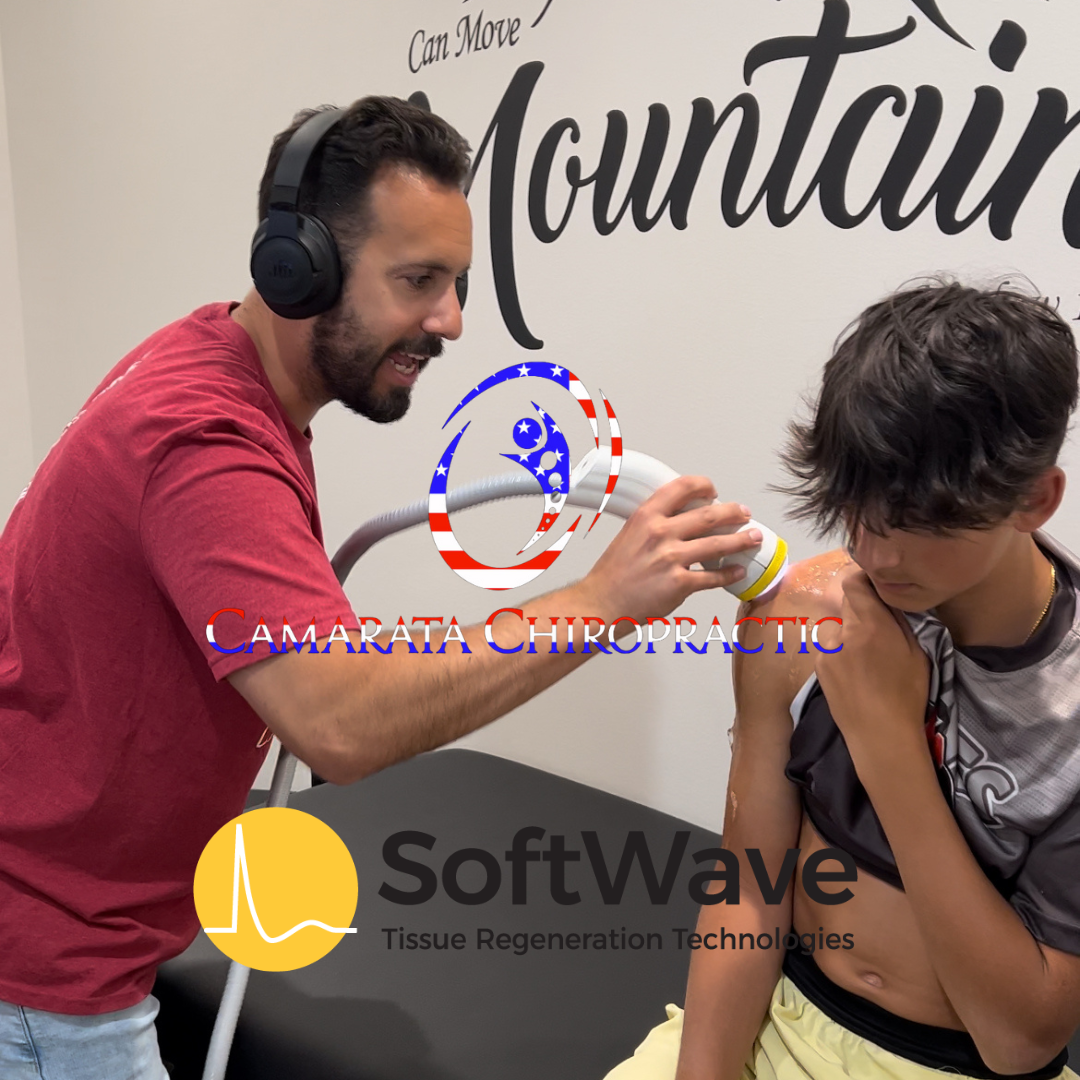
SoftWave Tissue Regeneration Therapy to stimulate healing responses
-
Nutrition strategies that support metabolic and cellular health
-
Recovery protocols designed to improve sleep and resilience
By addressing the body at the cellular and neurological level, we aim to help patients improve energy, recovery, performance, and long-term health.
The Future of Health May Begin at the Cellular Level
The human body is incredibly intelligent and adaptive.
When given the right inputs, movement, nutrition, recovery, and supportive therapies, it has the ability to strengthen its cellular energy systems and function at a higher level.
Energy, recovery, resilience, and performance all begin at the same place:
Inside your cells.
Supporting mitochondrial health may be one of the most important strategies for improving how the body functions today and how it performs in the future.
Get a Hold of Us
Camarata Chiropractic & Wellness
3237 Union St
North Chili, NY 14514
Phone: 585-617-4145
Email: info@camaratachiropractic.com
Facebook: https://www.facebook.com/camaratachiropractic
Instagram: https://www.instagram.com/camarata_chiro/
If you are interested in learning how chiropractic care, recovery therapies, and lifestyle strategies can support your health, energy, and performance, our team is here to help.
New Patient Scheduler Online Here!

The information provided in this article is for educational and informational purposes only and is not intended as medical advice. Content shared on this website is not meant to diagnose, treat, cure, or prevent any condition. Individual health needs and circumstances vary. Always consult with your healthcare provider or speak with our team at Camarata Chiropractic & Wellness before making changes to your health, nutrition, hydration, exercise, or lifestyle routines.
‹ Back
Recent Posts
-
-

-
Your Child's First Chiropractic Visit: What Parents Can Expect
August 26, 2026
-

Red Light Therapy vs Tanning Beds: What Is Actually Different
August 22, 2026
-


 3237 Union St, North Chili, NY 14514
 (585) 617-4145