
Blog

Blog

Stretching… But Nothing Is Loosening Up? Your Brain May Be the Missing Piece
Published February 24th, 2026 by Camarata Chiropractic

Most people assume tight muscles are a flexibility problem.

If something feels tight, the logical response seems obvious:
Stretch it.

Yet this familiar pattern plays out every single day:

You stretch your neck.
You stretch your hips.
You stretch your hamstrings.

Temporary relief… then the tightness returns.

Sometimes within hours.

Sometimes within minutes.

If this sounds familiar, you’re not alone — and more importantly, you’re not imagining things.

Because many cases of persistent muscle tightness are not primarily muscular problems at all.

They are neurological.


Tight Muscles Are Often a Brain Strategy, Not a Tissue Limitation

Your muscles do not operate independently.

They are controlled, regulated, and constantly adjusted by your nervous system.

At any given moment, your brain is making decisions about:

  • Stability

  • Safety

  • Balance

  • Threat detection

  • Energy efficiency

Muscle tension is one of the brain’s primary tools for managing these demands.

When your brain perceives instability or stress — whether physical, chemical, or emotional — it often increases muscle tone as a protective response.

Not dysfunction.

Protection.

This process is called muscle guarding.

Your brain tightens muscles to create:

  • Structural stability

  • Joint protection

  • Postural control

  • Movement safety

In other words:

Your body may not be tight because it lacks flexibility.

Your body may be tight because your brain believes tension is necessary.


Why Stretching Alone Sometimes Fails

Stretching works beautifully when the limitation is truly mechanical.

But when tightness is driven by the nervous system, stretching often produces only short-term change.

Why?

Because you are addressing the symptom — not the driver.

You are lengthening tissue…

While the brain continues to send signals to tighten it.

This explains a frustrating reality many people experience:

The muscle loosens temporarily.
The nervous system re-engages protection.
The tension returns.

Nothing is “wrong” with your body.

Your brain is simply prioritizing safety.


The Nervous System’s Role in Muscle Tone

Your nervous system constantly regulates muscle tension through a complex network involving:

  • The brainstem

  • The cerebellum

  • The vestibular system

  • Visual processing centers

  • Proprioceptive feedback systems

These systems work together to answer one fundamental question:

“Is the body stable and safe?”

If the answer is uncertain, muscle tone often increases.

This is why tension frequently accompanies:

  • Stress

  • Fatigue

  • Poor sleep

  • Injury history

  • Balance deficits

  • Sensory overload

Muscles are responding to perceived instability — not just physical tightness.


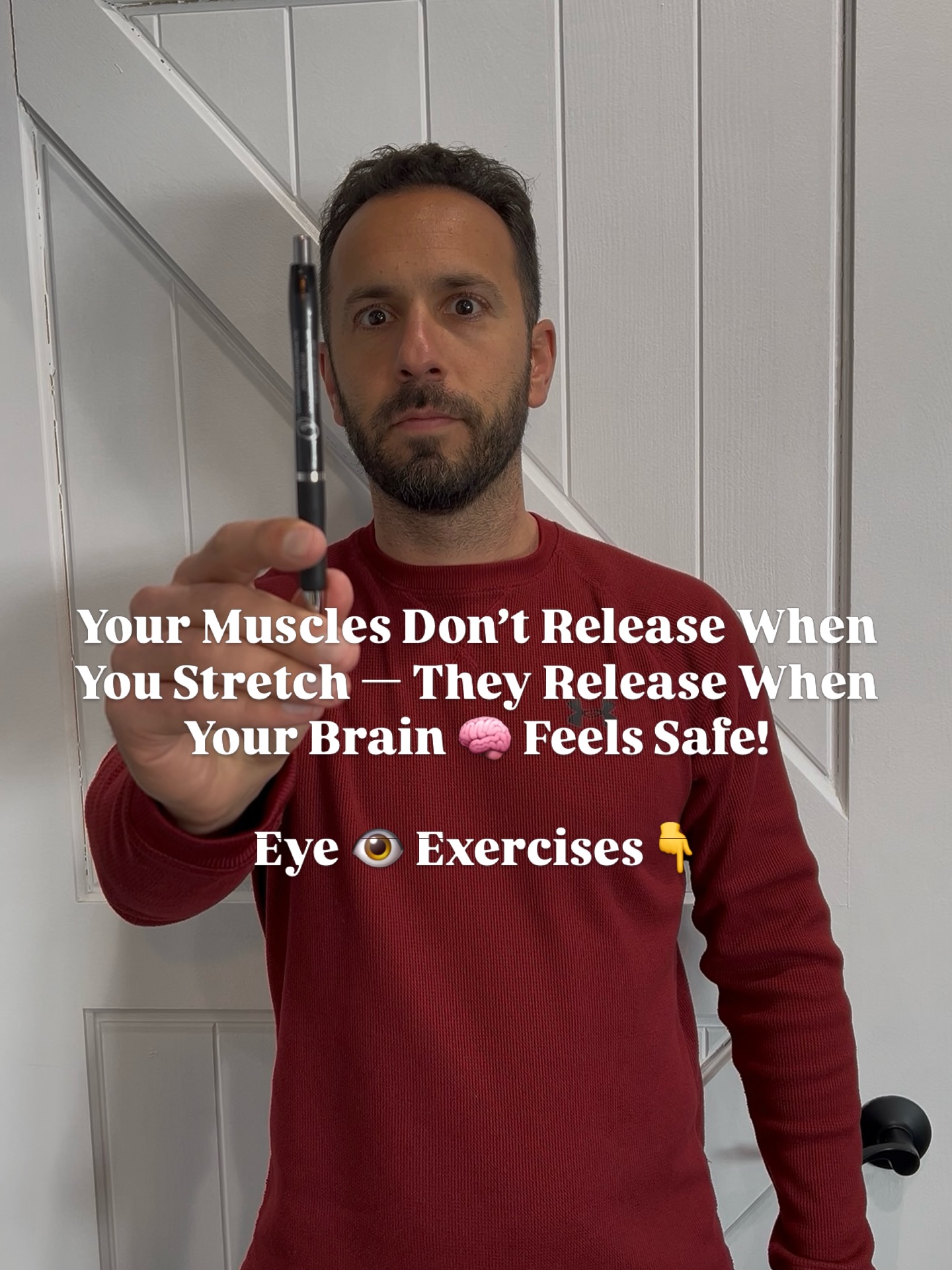
The Surprising Power of Eye Movements

One of the fastest ways to influence the brain is through visual input.

Your visual system is deeply integrated with:

  • Balance mechanisms

  • Postural control

  • Spatial awareness

  • Autonomic nervous system regulation

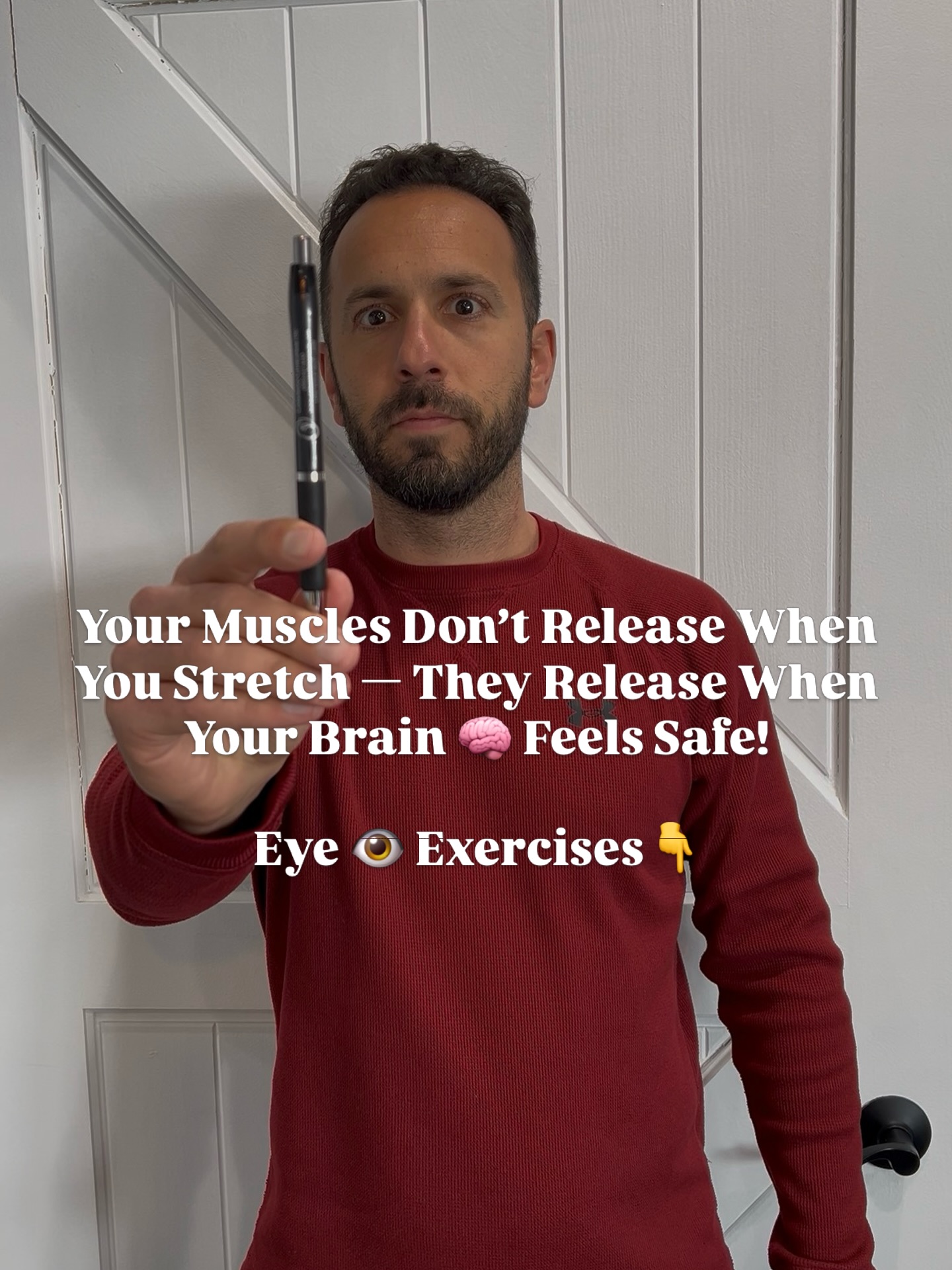
Specific eye exercises can stimulate and recalibrate these networks.

Three of the most powerful include:

Smooth Pursuits

Slow, controlled visual tracking movements that improve sensory processing and neurological coordination.

Saccades

Rapid eye movements between targets that sharpen brain speed, reaction, and neural efficiency.

Vestibulo-Ocular Reflex (VOR)

Exercises that stabilize vision during head movement, strengthening balance and brainstem reflex pathways.

These are not “eye exercises” in the traditional sense.

They are brain exercises.


How Better Input Changes Muscle Output

When the brain receives clearer, more stable sensory information, it often adjusts protective tension patterns.

Improved neurological input can lead to:

  • Reduced muscle guarding

  • Smoother movement

  • Improved mobility

  • Enhanced coordination

  • Greater postural stability

Because relaxed muscles are not forced.

They are permitted.

When the brain senses stability and safety, it frequently allows tension to decrease.


Why This Matters for Chronic Tightness & Pain

Persistent tightness is rarely just a comfort issue.

It often contributes to:

  • Compensation patterns

  • Altered movement mechanics

  • Increased joint stress

  • Reduced performance capacity

  • Ongoing pain cycles

When the nervous system remains in protective mode, the body never fully exits defense.

Mobility work becomes a constant battle.

True resolution often requires addressing the neurological component.


Real-World Observations From Clinical & Personal Experience

In both clinical practice and personal application, neurological strategies frequently produce outcomes that traditional approaches struggle to achieve.

Patients often report improvements in:

  • Neck mobility

  • Shoulder movement

  • Hip flexibility

  • Balance & coordination

  • Movement fluidity

Even when stretching alone had limited success.

Because the brain — not just the muscle — was influencing the restriction.


The Bigger Principle: Movement Is Brain-Driven

Strength is neurological.
Stability is neurological.
Mobility is neurological.

Your brain is the command center behind every physical output.

When inputs improve, outputs often change.

This is why modern performance, recovery, and rehabilitation models increasingly incorporate neurological components.

Not as alternatives to traditional care…

But as amplifiers of it.


When Stretching Isn’t the Solution

If you find yourself constantly stretching the same areas with limited lasting change, it may be time to consider a broader perspective.

Not more force.

Better signaling.

Better input.

Better nervous system integration.


Get a Hold of Us

Camarata Chiropractic & Wellness
3237 Union St, North Chili, NY 14514
Phone: 585-617-4145
Email: info@camaratachiropractic.com

Facebook: https://www.facebook.com/camaratachiropractic
Instagram: https://www.instagram.com/camarata_chiro/

If your body feels stuck, restricted, or constantly tight, there may be more to the story than muscles alone.

New Patient Scheduler Online Here!

The information provided in this article is for educational and informational purposes only and is not intended as medical advice. Content shared on this website is not meant to diagnose, treat, cure, or prevent any condition. Individual health needs and circumstances vary. Always consult with your healthcare provider or speak with our team at Camarata Chiropractic & Wellness before making changes to your health, nutrition, hydration, exercise, or lifestyle routines.


‹ Back

New Patients

Start your natural healing journey with a comprehensive new patient visit

Existing Patients

Continue your wellness path with convenient online scheduling options

SoftWave Patients

Experience Rochester's breakthrough pain relief & regenerative technology!

Contact Us

Get personalized guidance to find your perfect health solution.