
Blog
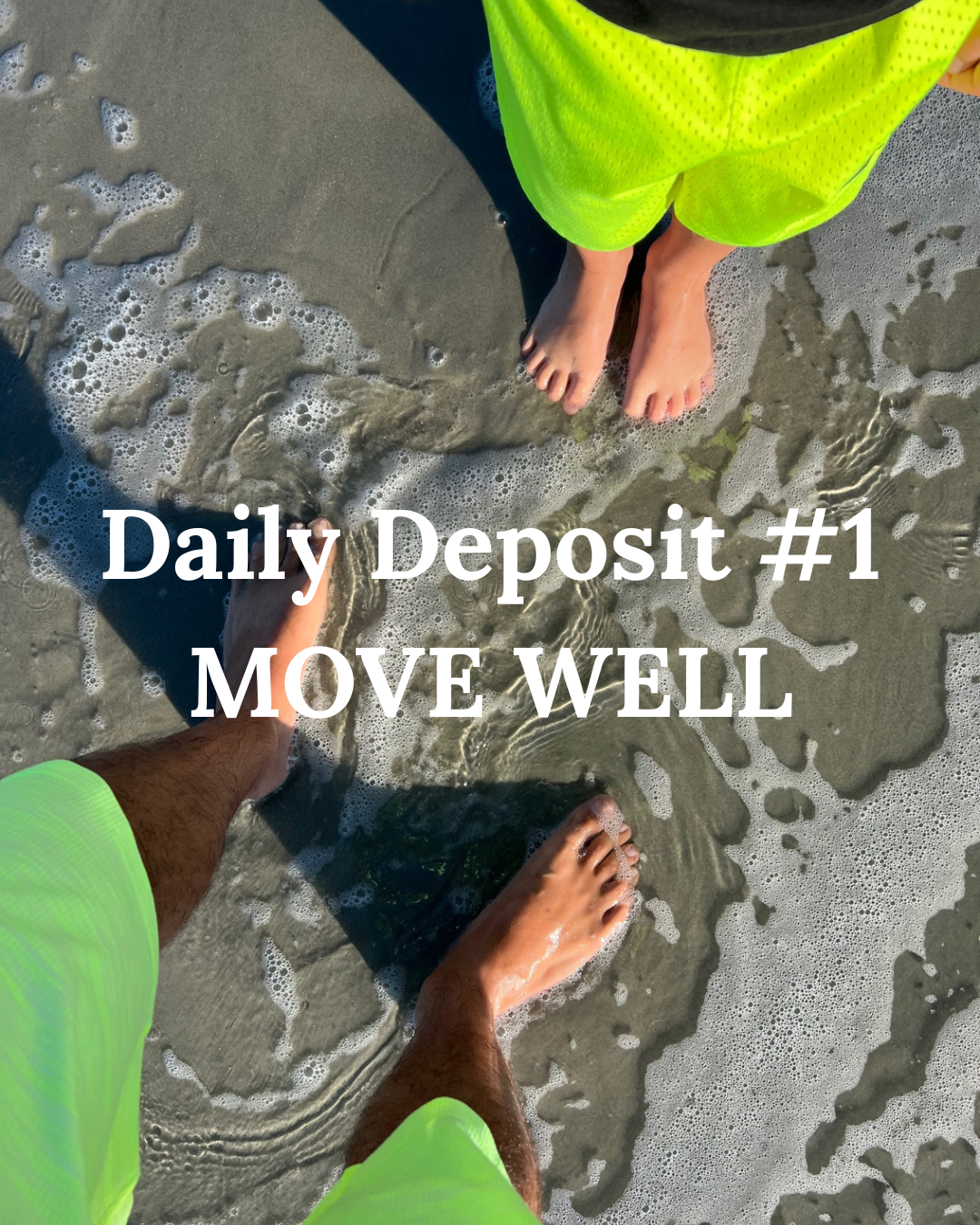
Daily Deposit #1: MOVE WELL
Your Body Was Designed to Move
Health Is Wealth. Make Your Deposits Daily.
Have you ever felt like you've hit a plateau?
Maybe you're feeling better than when you first started care, but your progress has slowed. Maybe you're dealing with persistent stiffness, aches or inflammation. Or maybe you simply want to become a more active participant in your health instead of waiting until something hurts before doing something about it.
This is exactly why we created The Daily Deposit Method.
Think about your health like a bank account.
Every day, life makes withdrawals through what we call the 3 T's of stress:
- Physical stress — sitting, repetitive movements, injuries, training, poor movement patterns, lack of activity and everyday wear and tear.
- Chemical stress — nutrition, dehydration, alcohol, environmental exposures, metabolic stress and other factors.
- Emotional stress — work, relationships, finances, deadlines, worry, lack of sleep and the demands of everyday life.
We cannot eliminate every withdrawal.
And we don't want to eliminate all stress. Appropriate physical challenges such as walking, resistance training and exercise are examples of stressors that can stimulate beneficial adaptation.
The goal is to develop a body that is increasingly capable of adapting, recovering and responding to the demands placed upon it.
That's where your deposits come in.
And Daily Deposit #1 is one of the most important:
MOVE WELL.

Movement Is More Than Exercise
When people hear "movement," they often immediately think:
I need to work out.
Exercise is incredibly important, but movement is much bigger than your 30–60 minute workout.
Movement includes:
Walking.
Standing.
Changing positions.
Taking the stairs.
Playing with your kids.
Gardening.
Strength training.
Mobility work.
Moving your joints through their available ranges of motion.
Getting outside.
Carrying groceries.
Playing a sport.
Even getting up from your desk several times throughout the workday.
Your body isn't designed to exercise for 45 minutes and then remain virtually motionless for the other 15 waking hours.
Movement should be woven throughout your day.
Why Does Movement Matter So Much?
Your body responds to the demands you consistently place upon it.
Muscles need resistance.
Bones need loading.
Joints need movement.
Your cardiovascular system needs activity.
Your brain needs sensory information.
Your metabolism benefits from muscular activity.
Your balance systems need to be challenged.
Your tissues need appropriate mechanical loading.
This is one reason physical activity is associated with such a broad range of health benefits, including cardiovascular, metabolic, musculoskeletal and brain health.
Movement is information.
Every time you move, sensory receptors throughout your muscles, joints, tendons, skin, eyes and inner ear are continually providing information to your nervous system.
Your brain receives that information, processes it and helps coordinate an appropriate response.
Movement isn't just something your muscles do.
Movement is a conversation between your body and your brain.
Motion Helps Maintain Motion
One of the most common patterns we see is:
Something hurts → I move less → I get stiffer → movement becomes harder → I move even less.
Over time, people can become afraid to move.
But complete inactivity isn't usually the answer.
Movement should certainly be modified when someone has an acute injury or medical condition, and there are situations where temporary rest is appropriate.
However, in many circumstances, appropriate, progressive movement is part of getting the body functioning again.
That's why we don't want you simply asking:
"What movement hurts?"
We also want to ask:
"What movement CAN I safely perform today?"
Start there.
If You've Hit a Plateau, Look at the Other 167 Hours
This is important.
There are 168 hours in a week.
Even if you visit our office multiple times, the overwhelming majority of your week happens outside Camarata Chiropractic.
That's why your home habits matter.
Chiropractic care can be an important part of your plan, but it does not replace daily movement, strength, mobility, nutrition, sleep and recovery.
We want you participating in your health journey.
What happens between your visits matters.
If progress has slowed, don't automatically assume your care isn't working.
Zoom out.
Ask:
How much am I sitting?
How many steps am I taking?
Am I strength training?
Am I moving throughout my workday?
Am I doing my recommended home exercises?
How is my mobility?
How am I sleeping?
How am I recovering?
Has my stress changed?
Have I stopped doing some of the things that helped me feel better in the first place?
Sometimes the next breakthrough doesn't come from doing something dramatic.
It comes from improving the fundamentals.
MOVE WELL Strategy #1: WALK
If you're looking for one of the simplest places to start, start walking.
Walking doesn't require a gym membership, complicated equipment or an advanced training program.
And don't underestimate it because it's simple.
Walking increases physical activity, engages large muscle groups and can be accumulated throughout the day.
At Camarata Chiropractic, we often encourage patients who are medically able to gradually work toward approximately:
7,000–10,000 steps per day.
That isn't a magical number and it isn't appropriate for everyone.
If you're currently averaging 2,500 steps, don't become discouraged because you're nowhere near 10,000.
Your first goal might simply be:
2,500 → 3,500.
Then:
3,500 → 5,000.
Build gradually.
Easy ways to accumulate more steps:
- Take a 10-minute walk after meals.
- Park farther away.
- Take walking meetings.
- Walk while your child is at practice.
- Walk with your spouse after dinner.
- Take the stairs when appropriate.
- Set a reminder to get up during your workday.
- Walk outside first thing in the morning.
- Put your phone away and take a family walk at night.
Don't obsess about perfection.
Increase your movement from wherever you're starting.
MOVE WELL Strategy #2: BREAK UP SITTING
You can exercise every morning and still spend an enormous percentage of your day sitting.
Desk.
Car.
Couch.
Phone.
Computer.
Meetings.
Television.
Repeat.
Instead of obsessing over the "perfect posture" all day, another useful strategy is simply:
Change positions frequently.
Your next posture is often your best posture.
If your job requires prolonged sitting, consider building small movement snacks into your day.
Every 30–60 minutes, when practical:
Stand up.
Walk around.
Reach overhead.
Perform a few squats.
Move your hips.
Rotate your upper back.
Take several slow breaths.
Walk to refill your water.
It doesn't need to become a workout.
Two minutes of movement is still a deposit.
MOVE WELL Strategy #3: BUILD STRENGTH
Cardiovascular fitness matters.
Mobility matters.
Walking matters.
But we also want people to be STRONG.
Strength becomes increasingly important throughout life.
Muscle helps us:
Move.
Lift.
Carry.
Climb stairs.
Maintain independence.
Participate in sports.
Tolerate physical demands.
Support metabolic health.
Continue doing the things we love.
You don't have to become a bodybuilder.
You need to progressively challenge your body at an appropriate level.
Depending on your health and ability, that may include:
- Squats
- Hinges
- Pushes
- Pulls
- Carries
- Lunges
- Core stabilization
- Resistance bands
- Dumbbells
- Machines
- Bodyweight exercises
Train for the life you want to continue living.
Want to golf at 70?
Train for it.
Want to play on the floor with your grandchildren?
Train for it.
Want to carry your own groceries?
Train for it.
Want to remain independent as you age?
Train for it.
MOVE WELL Strategy #4: MOBILITY
There's a difference between simply being flexible and being able to control movement.
We want usable mobility.
That means having an appropriate range of motion and being able to control your body through that range.
Common areas many people can benefit from addressing include:
Ankles.
Hips.
Thoracic spine.
Shoulders.
But mobility exercises should be individualized.
Instead of randomly stretching everything because something feels tight, ask:
Why does this area continually feel tight?
Sometimes the location where you feel the problem isn't the only area contributing to it.
This is one reason your chiropractic evaluation, movement assessment and home recommendations matter.
MOVE WELL Strategy #5: DON'T FORGET YOUR FEET
Your feet are your connection to the ground.
They provide tremendous amounts of sensory information to your brain while helping with balance, stability and movement.
Spend some time allowing your feet to actually move.
Depending on your situation, that might include:
Toe mobility.
Foot strengthening.
Barefoot walking in an appropriate environment.
Balance exercises.
Calf strengthening.
Ankle mobility.
Different surfaces and sensory inputs.
Your feet aren't simply platforms underneath you.
They're part of your movement and sensory system.
MOVE WELL Strategy #6: TRAIN YOUR EYES AND BRAIN
Here's one that surprises many patients.
Your eyes are part of movement too.
Your visual system constantly interacts with your brain, balance system and movement system to help determine where you are in space.
Your eyes help coordinate your head, neck and body during everyday movement and athletic performance.
Simple visual exercises may be useful in certain individualized programs.
However, visual or neurological exercises shouldn't simply be prescribed randomly. Different exercises create different demands, and people experiencing dizziness, headaches, visual disturbances or neurological symptoms should be appropriately evaluated.
The takeaway is simple:
Movement isn't just muscles and joints. Your brain is involved in everything you do.
MOVE WELL Strategy #7: MOVE YOUR FASCIA
Your connective tissues adapt to the demands placed upon them too.
Rather than thinking about fascia as something you need to aggressively "break up," think about creating varied, progressive movement.
Reach.
Rotate.
Squat.
Hinge.
Walk.
Breathe.
Strengthen.
Move in different directions.
Our bodies don't live exclusively in straight lines.
Explore movement.
What About the BIG 6 and Lymphatic Movement?
Your lymphatic system is an important part of immune function and fluid balance.
Unlike the heart-driven circulatory system, lymph movement is influenced by factors including skeletal muscle contractions and breathing.
This is another reason movement matters.
Some patients may also be familiar with the BIG 6 routine popularized by Dr. Perry Nickelston of Stop Chasing Pain.
If you're interested in incorporating lymphatic-focused techniques into your routine, ask us whether they're appropriate for you and how they fit into your overall plan.
And remember:
These techniques don't replace medical evaluation for persistent or unexplained swelling, redness, warmth, fever or other concerning symptoms.
What About Grounding?
Some people enjoy spending time barefoot outdoors—often called grounding or earthing—as part of their wellness routine.
The evidence for specific health claims surrounding grounding is still developing, so we don't want to overstate what science currently supports.
But there's another reason I personally enjoy it:
It gets you outside.
You're moving.
You're connecting with nature.
You're getting away from screens.
You're slowing down.
You're spending time in natural light.
You're giving your feet different sensory input.
Sometimes a healthy habit doesn't need to be complicated.
What If You're Dealing With Persistent Inflammation?
This is where we need to zoom out.
Persistent pain or inflammation doesn't automatically mean you simply need to move more.
There can be many contributors.
Physical load.
Sleep.
Nutrition.
Metabolic health.
Previous injury.
Stress.
Recovery.
Medical conditions.
Medications.
Hormonal factors.
And many others.
This is exactly why The Daily Deposit Method isn't about ONE deposit.
MOVE is only Deposit #1.
We'll also be discussing:
FUEL WELL.
RECOVER WELL.
CONNECT WELL.
If you're struggling despite doing many things correctly, that's a reason to look at the bigger picture—not blame yourself or blindly add more exercise.
Persistent, severe, unexplained or worsening inflammation deserves appropriate clinical evaluation.
Chiropractic + Movement: Build On the Adjustment
One of my biggest messages to patients is:
Don't just get adjusted. BUILD on your adjustment.
Chiropractic care and your daily habits shouldn't live in separate worlds.
We want to help improve how your joints and musculoskeletal system are functioning, and then we want YOU participating in the process outside the office.
Walk.
Move.
Strengthen.
Practice your mobility.
Perform the exercises we've recommended.
Hydrate.
Recover.
Sleep.
Then come back and let us know what you're noticing.
Your care is a partnership.
What About BioStacking?
For some patients—particularly those dealing with persistent musculoskeletal problems, injuries or recovery challenges—we may recommend combining chiropractic care with additional strategies available at Camarata Chiropractic & Wellness.
Depending on the individual, that could include:
Chiropractic + SoftWave Therapy
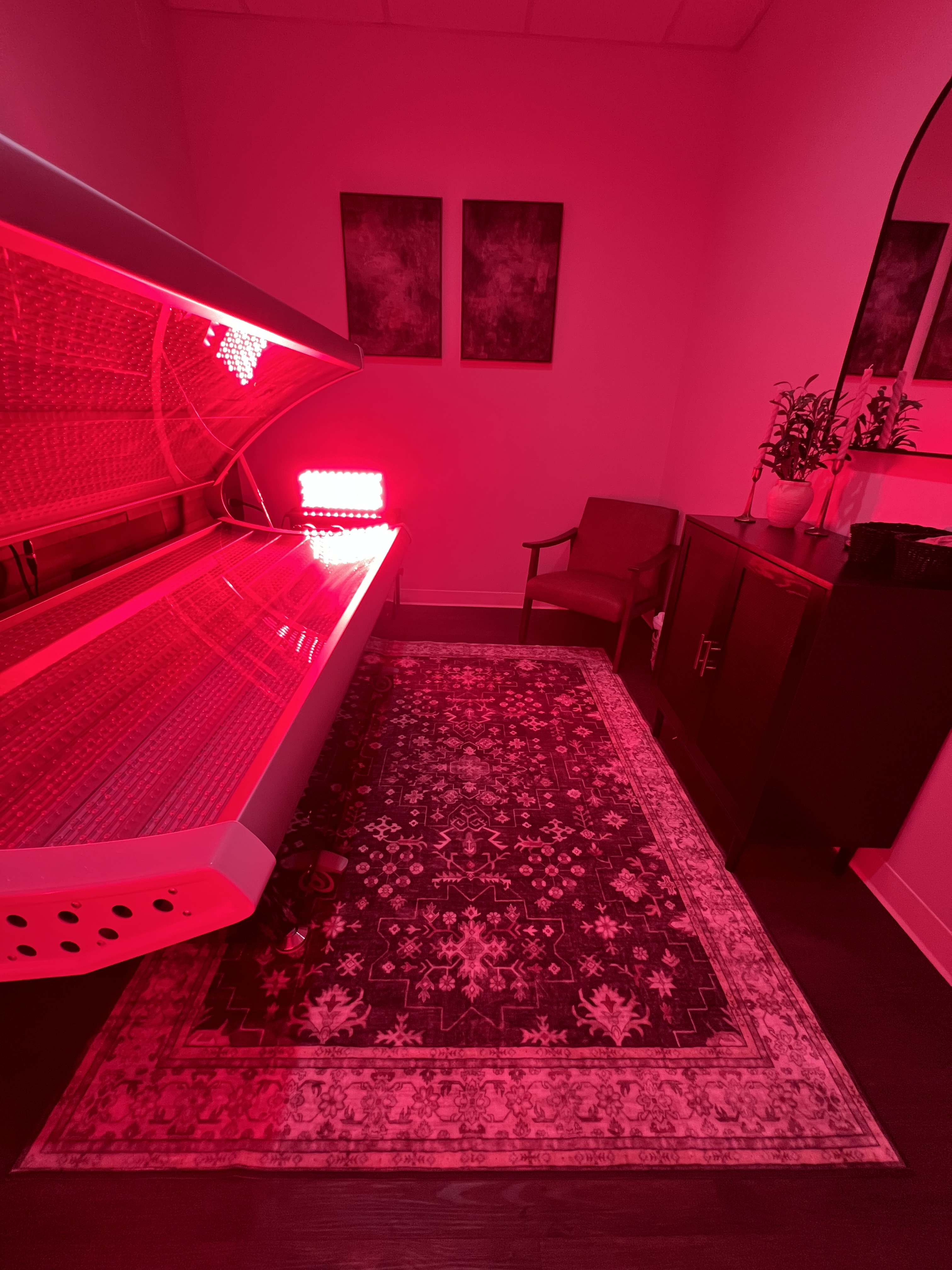
Chiropractic + Red Light Therapy
Chiropractic + Infrared Sauna
Chiropractic + individualized home movement
Or a combination of approaches.
We call this concept BioStacking.
The goal isn't to pile more and more treatments onto someone.
It's to identify the major barriers to progress and determine which combination of appropriate inputs may best support that person's goals.
And even with advanced technology available in our office, one of the most powerful tools remains something you have access to every day:
YOUR BODY.
Use it.
Your MOVE WELL Challenge
Don't finish this article and simply think:
"That was interesting."
Do something with it.
For the next 7 days, challenge yourself to intentionally make your MOVE deposit.
Start with these five actions:
1. KNOW YOUR BASELINE
Check your average daily steps from the last week.
Don't judge it.
Just know your starting point.
2. ADD A DAILY WALK
Start with 10–20 minutes if appropriate for you.
Morning, lunch, after dinner—it doesn't matter.
Make it sustainable.
3. BREAK UP LONG PERIODS OF SITTING
Set reminders throughout your workday to stand and move.
4. PERFORM YOUR RECOMMENDED MOBILITY OR HOME EXERCISES
Consistency beats doing an enormous routine once per week.
Even 5–10 intentional minutes can be a meaningful deposit.
5. STRENGTHEN YOUR BODY
If you're cleared and able, incorporate appropriate resistance training into your week.
If you don't know where to start, ask us.
Ask Yourself This Every Morning
Before the craziness of the day takes over, ask yourself:
"How am I going to MOVE WELL today?"
Maybe today's deposit is a workout.
Tomorrow's might be a 30-minute walk.
Another day might be mobility because your body needs recovery.
Another might simply be getting up from your desk more frequently.
Your deposit doesn't have to look the same every day.
It just needs to keep happening.
Small Deposits Compound
One workout isn't going to transform your health.
One walk won't undo years of inactivity.
One adjustment isn't going to erase every physical stressor.
One mobility session won't permanently change how your body moves.
But something powerful happens when healthy behaviors become consistent behaviors.
Walk today.
Move tomorrow.
Strengthen this week.
Keep your chiropractic appointments.
Do your home recommendations.
Recover.
Repeat.
Those deposits begin adding up.
Then they begin compounding.
And that's the entire philosophy behind The Daily Deposit Method.
Life is going to make withdrawals.
You can't control all of them.
But you CAN become intentional about making deposits.
DAILY DEPOSIT #1: MOVE WELL.
Walk. Move. Strengthen. Mobilize. Participate.
Don't simply wait for health to happen to you.
Become an active participant in your health journey.
Small deposits. Made daily. Compounded for life.
HEALTH IS WEALTH.
Questions? We're Here to Help.
If you've hit a plateau, you're struggling with persistent pain or inflammation, or you simply want to become more proactive with your health, talk with us at your next visit.
Rather than randomly adding more exercises, supplements or therapies, we can help you look at your current withdrawals and deposits and determine where there may be opportunities to improve.
Camarata Chiropractic & Wellness
3237 Union St
North Chili, NY 14514
585-617-4145
Website: www.camaratachiropractic.com
Natural Healing & SoftWave: www.naturalhealingroc.com
Follow us for more Daily Deposit education:
Instagram: @camarata_chiro
Facebook: Camarata Chiropractic
MOVE WELL. FUEL WELL. RECOVER WELL. CONNECT WELL.
HEALTH IS WEALTH. Make Your Deposits Daily.
Important Disclaimer
This article is provided for educational and informational purposes only and is not intended to diagnose, treat, cure or prevent any disease or medical condition. The information provided here should not replace individualized medical advice, diagnosis or treatment.
Do not start, stop or significantly change your exercise program, treatment plan, medications, supplements, diet or other healthcare recommendations based solely on this article. Always consult with the team at Camarata Chiropractic & Wellness and/or your physician or other qualified healthcare professional before making changes, particularly if you have an existing medical condition, injury, persistent inflammation or other health concerns.
If something in this article raises a question about your individual situation, please reach out to us or talk with us at your next visit. We want your Daily Deposits to be appropriate for YOU.
‹ Back
Recent Posts
-
-
-
Your Child's First Chiropractic Visit: What Parents Can Expect
August 26, 2026
-

Red Light Therapy vs Tanning Beds: What Is Actually Different
August 22, 2026
-


 3237 Union St, North Chili, NY 14514
 (585) 617-4145