
Blog
The Jaw, the Upper Neck, and the Brainstem: Why Alignment Changes Everything
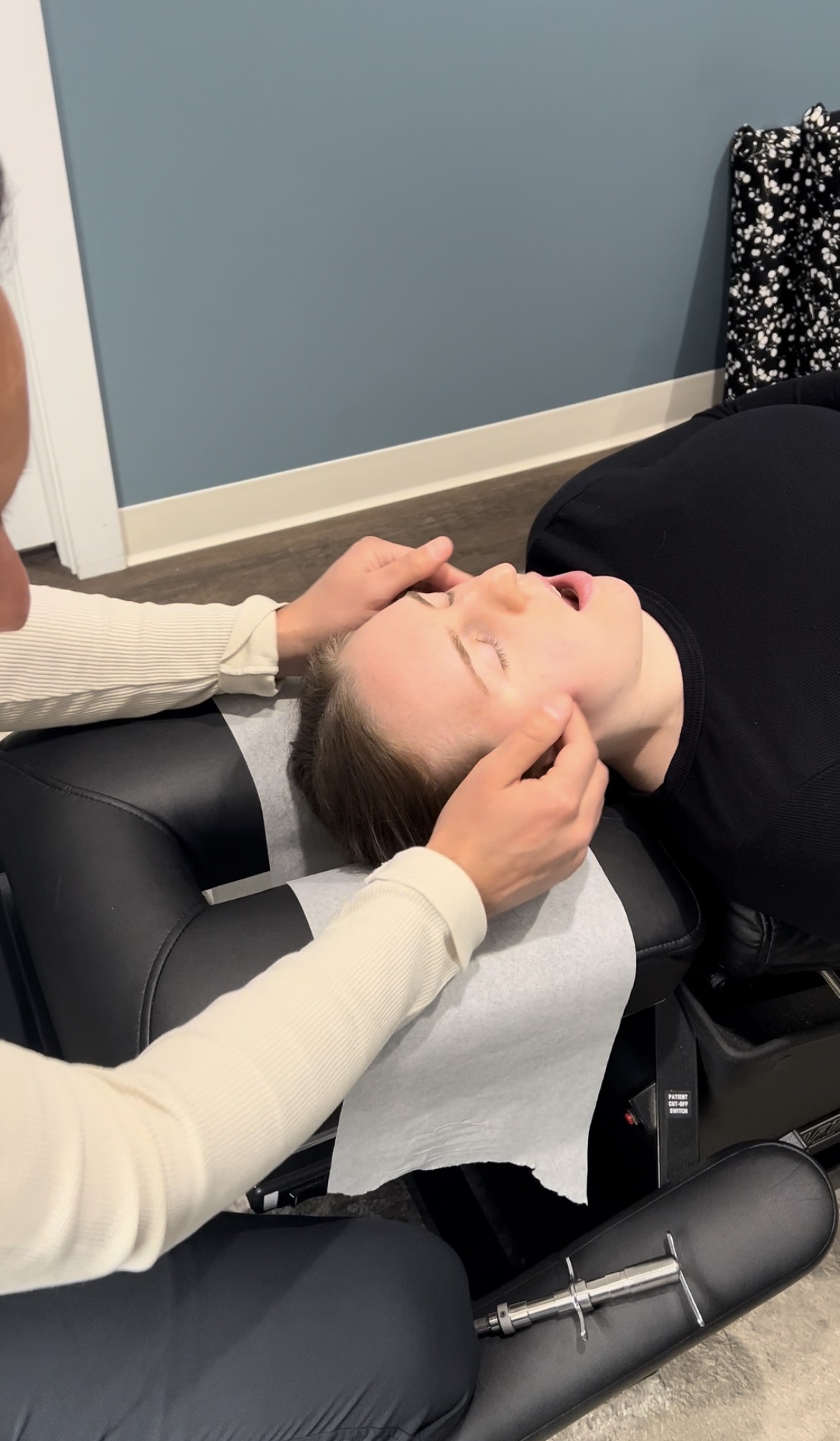
Most people think of the jaw and the neck as separate issues.
Jaw pain? Must be TMJ.
Neck pain? Probably posture.
Headaches? Maybe stress.
But anatomically and neurologically, the jaw and the upper cervical spine are deeply connected, especially the atlas (C1) and axis (C2). When one is off, the other often follows. And at the center of it all? The brainstem and the vagus nerve.
Let’s break this down, and then I’ll show you how to check yourself at home.
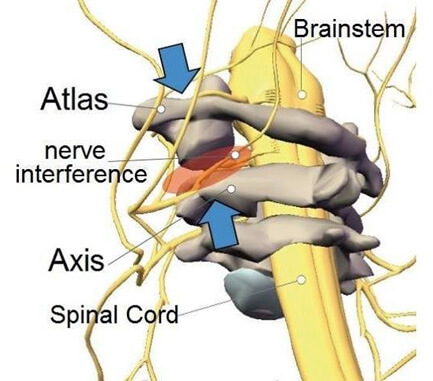
The Atlas and Axis: Your Head's Foundation
The atlas (C1) supports your skull.
The axis (C2) allows rotation.
Together, they:
-
Control most of your head movement
-
Protect the lower brain (brainstem)
-
Influence posture
-
Affect nerve communication to the entire body
The skull sits directly on C1. If C1 shifts or rotates, the skull shifts with it. If the skull shifts, the jaw mechanics change.
The Jaw (TMJ) and Its Direct Link to the Upper Cervical Spine
The temporomandibular joint (TMJ) connects your jaw to your skull.
Here’s where it gets powerful:
-
The jaw attaches to the skull.
-
The skull rests directly on the atlas (C1).
-
C1 rotates around C2.
-
The muscles that control the jaw also attach into the upper neck.
This means:
-
If the jaw shifts, the skull shifts.
-
If the skull shifts, the atlas compensates.
-
If the atlas rotates, the axis follows.
-
If C1 and C2 rotate, the jaw often compensates again.
It becomes a feedback loop.
That’s why jaw dysfunction often shows up with:
-
Upper neck tightness
-
Headaches at the base of the skull
-
Ear fullness or ringing
-
Clicking or popping in the jaw
-
Limited neck rotation
-
Forward head posture
The trigeminal nerve (jaw nerve) and upper cervical nerves share neurological pathways. When one becomes irritated, the other can amplify symptoms.
The Brainstem: The Command Center
The brainstem sits right above C1 and C2.
This is not random design. It’s intentional architecture.
If the atlas shifts:
-
It can alter how the skull sits.
-
It can change tension patterns in surrounding muscles.
-
It can influence dural tension (the connective tissue around the brain and spinal cord).
-
It can affect how the nervous system communicates with the body.
The body is incredibly adaptable, but chronic compensation creates dysfunction over time.
The Vagus Nerve: The Calm-Down Nerve
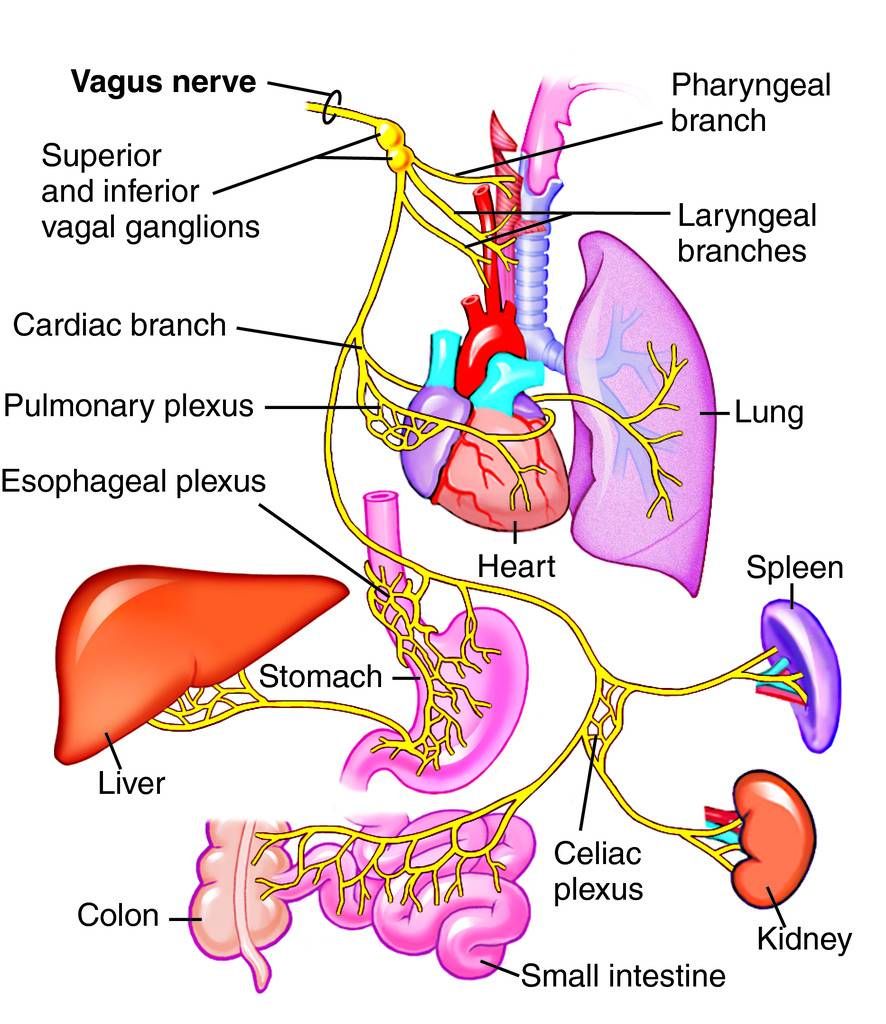
The vagus nerve originates in the brainstem and travels down through the neck into the heart, lungs, and digestive organs.
It controls:
-
Parasympathetic (rest-and-digest) activity
-
Heart rate variability
-
Gut motility
-
Inflammation regulation
-
Emotional regulation
If upper cervical tension is high or the surrounding tissues are restricted, it can influence vagal tone.
When vagal tone is low, people may experience:
-
Anxiety or feeling “on edge”
-
Digestive issues
-
Poor sleep
-
Rapid heart rate
-
Difficulty calming down
When alignment and mobility improve, many patients report:
-
Better breathing
-
Improved digestion
-
Deeper sleep
-
Less jaw clenching
-
Reduced neck tension
This isn’t magic. It’s neurology.
Why Treating the Jaw Alone Often Fails
If you only treat the jaw:
-
The neck may still be driving the dysfunction.
If you only treat the neck:
-
The jaw may still be pulling the system off balance.
A comprehensive approach looks at:
-
Upper cervical alignment (C1/C2)
-
TMJ mechanics
-
Muscle balance
-
Posture
-
Nervous system regulation
-
Breathing patterns
Because the jaw and neck are not separate systems, they are part of one integrated neuro-mechanical network.
Signs Your Jaw and Upper Neck May Be Connected
You may have upper cervical and jaw involvement if you experience:
-
Chronic headaches
-
TMJ clicking or pain
-
Neck stiffness at the base of the skull
-
Ear pressure or ringing
-
Dizziness
-
Brain fog
-
Clenching or grinding
-
Limited head rotation
-
Forward head posture
These are not random symptoms. They often share a common neurological and biomechanical origin.
Alignment Is About Communication
Alignment isn’t about “bones being out.”
It’s about:
-
Reducing abnormal stress
-
Improving mechanical balance
-
Optimizing nerve signaling
-
Supporting brainstem function
-
Enhancing vagal tone
When the atlas and axis move properly, the skull balances better.
When the skull balances better, the jaw functions better.
When the brainstem communicates clearly, the body regulates better.
Structure influences function. Always.
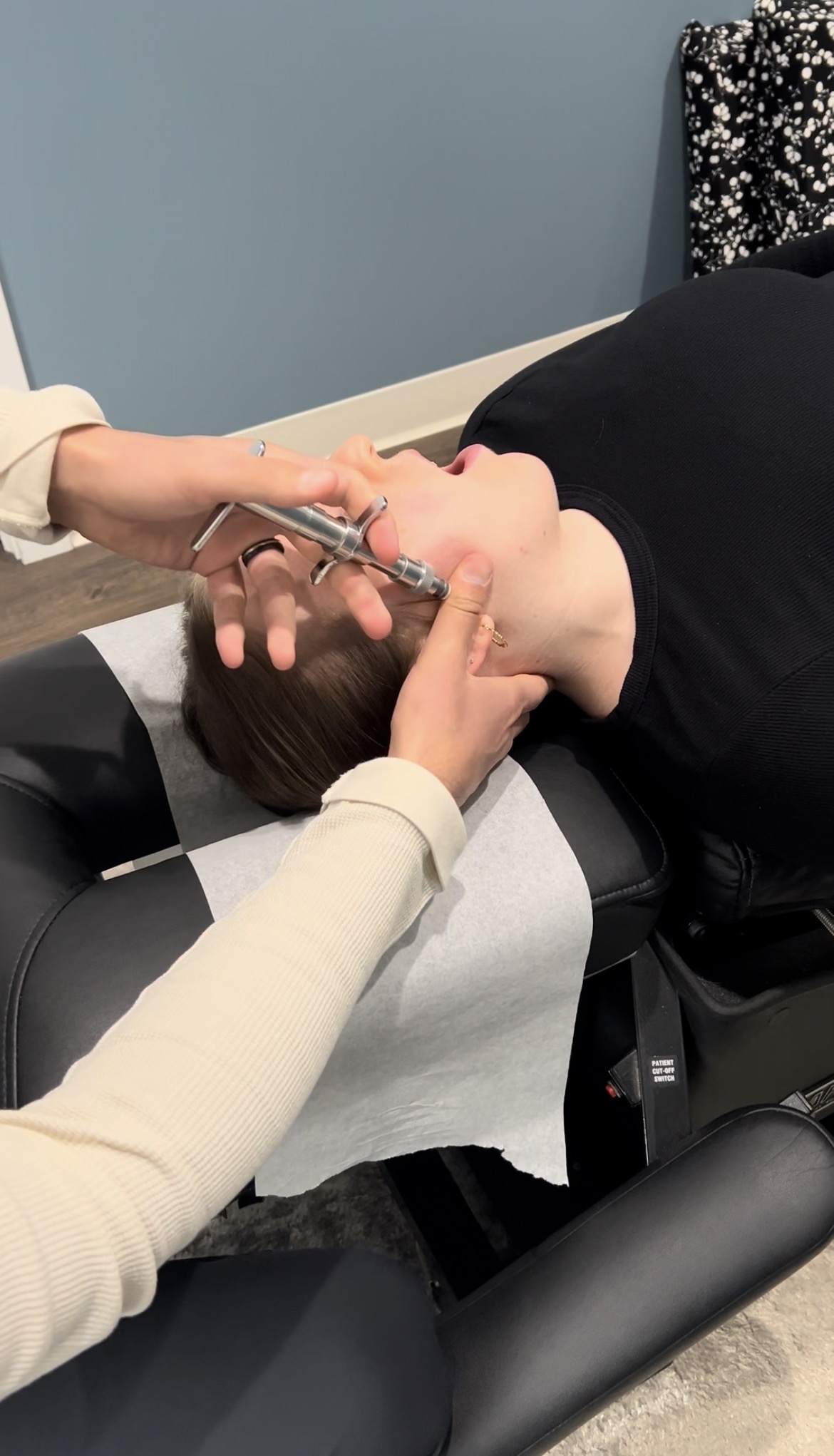
At-Home Self-Check: Is Your Jaw and Neck Off?
You can’t diagnose yourself at home, but you can look for patterns of asymmetry.
Here’s how to check.
1. Mirror Assessment (Neutral Face Test)
Stand in front of a mirror with:
-
Teeth lightly together
-
Lips relaxed
-
Eyes forward
Look for:
-
Is your head tilted slightly to one side?
-
Are your eyes level, or is one slightly higher?
-
Are your ears level?
-
Does your nose appear centered over your chin?
-
Does your jaw look shifted left or right?
-
Is one side of your face fuller or tighter?
Subtle asymmetry is normal. Significant tilt or rotation is worth noting.
2. Smile Test
Smile naturally in the mirror.
Look for:
-
Does one side of your smile lift higher?
-
Does your chin shift to one side?
-
Does your jaw deviate when you open and close your mouth?
-
Does one cheek look more dominant?
A smile can reveal jaw tracking patterns and muscular imbalance.
3. Photo Analysis
Pull up recent photos of yourself, especially relaxed candid photos.
Ask:
-
Is your head always tilted in pictures?
-
Do you consistently lean to one side?
-
Is one shoulder higher?
-
Does your chin rotate slightly?
-
Does your jawline look more defined on one side?
Patterns across multiple photos are more telling than a single image.
4. Upper Trap and Shoulder Check
Stand sideways in the mirror or have someone take a back photo.
Look for:
-
Is one shoulder higher than the other?
-
Is one upper trap thicker or more prominent?
-
Does one side of your neck look tighter?
-
Does your head sit slightly forward?
-
Does your head shift right or left instead of sitting centered?
Chronic upper trap tension often correlates with upper cervical rotation.
5. Jaw Opening Test
In front of a mirror:
Slowly open your mouth.
Watch your lower jaw.
-
Does it open straight?
-
Or does it swing left or right first?
-
Does it click?
-
Does one side feel tighter?
Jaw deviation can indicate muscular imbalance or cervical involvement.
6. Rotation Test
Sit tall.
Turn your head fully to the right.
Then fully to the left.
Ask yourself:
-
Is one direction tighter?
-
Do you feel pulling into one upper trap?
-
Does your jaw feel restricted on one side?
C1 and C2 control much of your rotational movement. Asymmetry here is common when alignment is off.
What These Signs Can Mean
If you notice:
-
Head tilt
-
Eye leveling differences
-
Ear leveling differences
-
Jaw shift
-
Shoulder unleveling
-
One upper trap thicker
-
Smile asymmetry
-
Jaw deviation when opening
It doesn’t automatically mean something is “seriously wrong.”
But it does suggest:
-
Compensation patterns
-
Muscular imbalance
-
Possible upper cervical rotation
-
TMJ involvement
-
Nervous system stress
The body always adapts. The question is whether those adaptations are costing you energy, comfort, or performance.
Why This Matters
The jaw, atlas, axis, brainstem, and vagus nerve are part of one integrated control system.
When that system is balanced:
-
Posture improves
-
Muscle tension decreases
-
Headaches often reduce
-
Jaw clenching decreases
-
Breathing improves
-
Nervous system regulation improves
When it’s off, compensation spreads.
The body doesn’t break suddenly.
It compensates gradually.
And the upper cervical spine is often where that compensation begins.
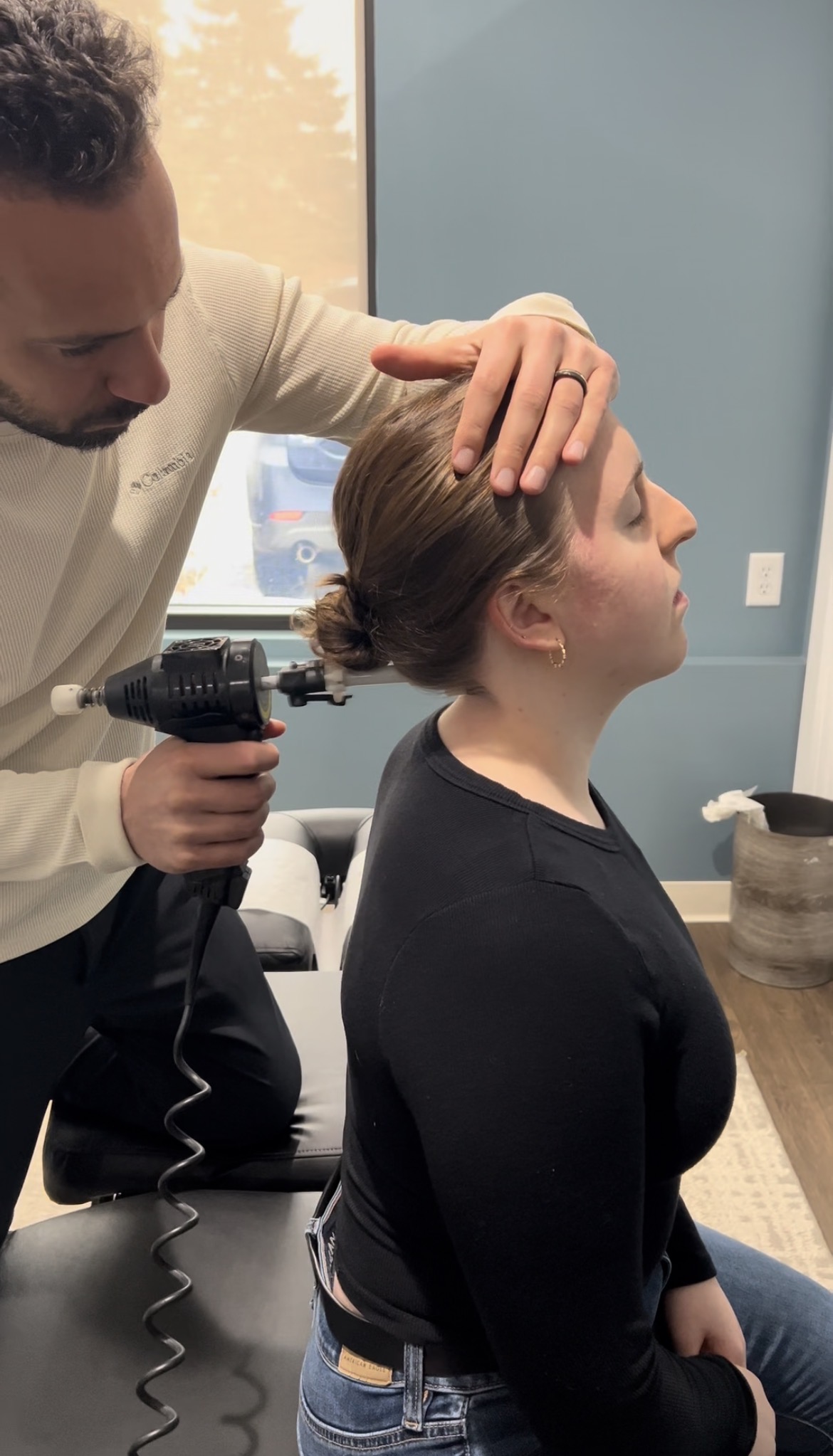
Final Takeaway
If your jaw shifts… your skull shifts.
If your skull shifts… your atlas compensates.
If your atlas compensates… your nervous system adapts.
Alignment isn’t about cracking bones.
It’s about restoring balance, symmetry, and communication.
And sometimes the mirror tells you more than you think.
Get a Hold of Us
If you’re noticing head tilt, jaw asymmetry, chronic neck tension, headaches, TMJ clicking, or nervous system stress, don’t ignore it. The jaw and upper cervical spine work together, and small imbalances can create long-term compensation patterns.
At Camarata Chiropractic & Wellness, we evaluate:
-
Upper cervical alignment (C1 & C2)
-
Jaw mechanics and TMJ function
-
Posture and head tilt patterns
-
Muscle imbalance (upper traps, neck, shoulders)
-
Nervous system regulation
Our goal is to restore balance, improve communication between the brainstem and body, and help you move, feel, and function at your highest level.
Camarata Chiropractic & Wellness
3237 Union St, North Chili, NY 14514
Phone: 585-617-4145
Email: info@camaratachiropractic.com
Facebook: https://www.facebook.com/camaratachiropractic
Instagram: https://www.instagram.com/camarata_chiro/
Call, text, or schedule online! We’re here to help you get aligned and optimized.
New Patient Scheduler Online Here!

The information provided in this article is for educational and informational purposes only and is not intended as medical advice. Content shared on this website is not meant to diagnose, treat, cure, or prevent any condition. Individual health needs and circumstances vary. Always consult with your healthcare provider or speak with our team at Camarata Chiropractic & Wellness before making changes to your health, nutrition, hydration, exercise, or lifestyle routines.
‹ Back
Recent Posts
-
-

-

SoftWave for Shin Splints: Help for Cross Country and Fall Runners
October 10, 2026
-
-


 3237 Union St, North Chili, NY 14514
 (585) 617-4145