
Blog
SoftWave for Chronic Ankle Sprains and Ankles That Keep Rolling
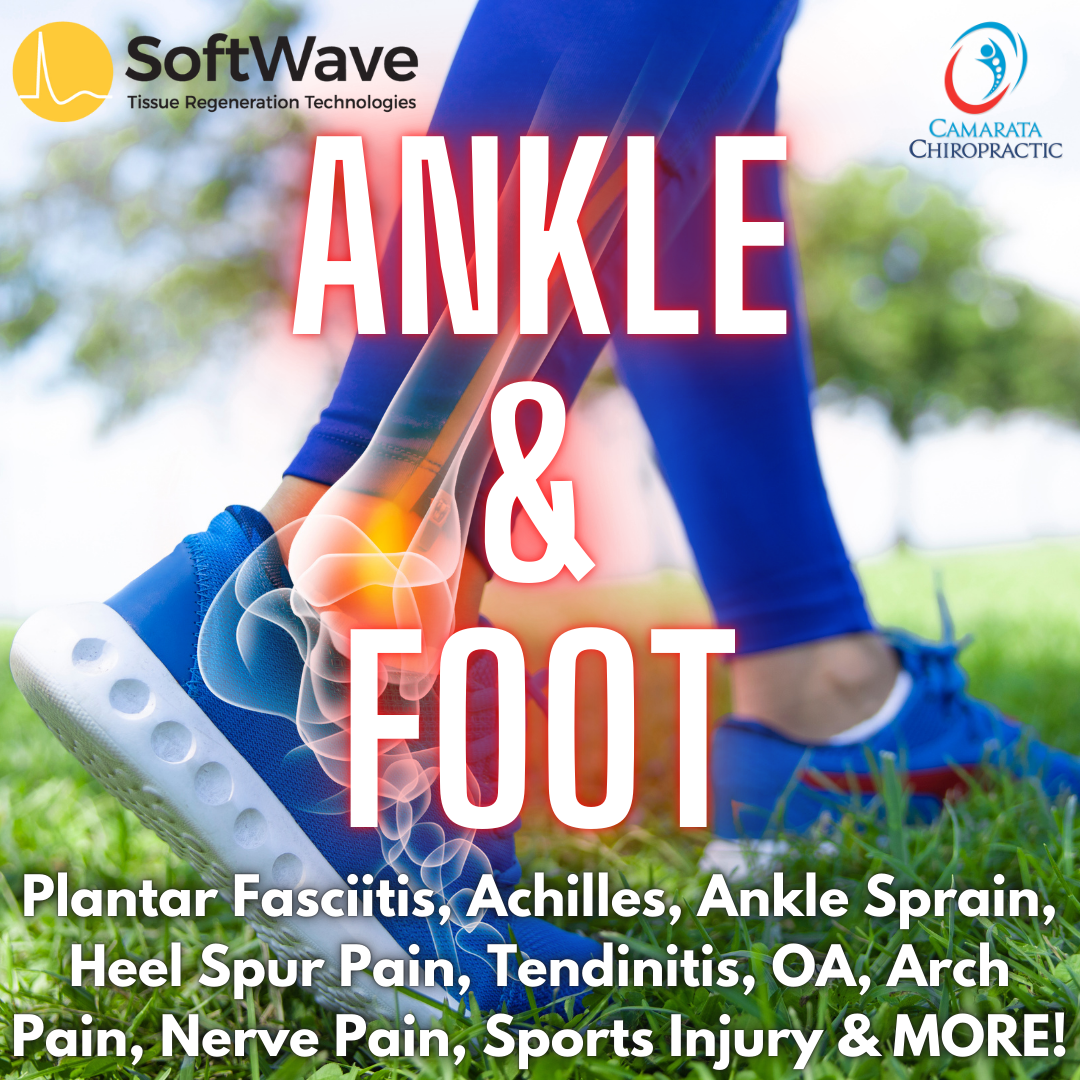
Ankle sprains are the most common sports injury there is.
Basketball players land on someone's foot. Soccer players catch a divot. Hikers step on a root. And plenty of people simply step off a curb wrong and feel that sickening roll.
Most people ice it, tape it, wait a week or two, and move on. But here is the problem: a large share of people who sprain an ankle go on to sprain it again. Some end up with ankles that roll with almost no provocation.
That is called chronic ankle instability, and it is very common, and very fixable.
What Happens in an Ankle Sprain
Most sprains are inversion sprains, where the foot rolls inward and the ligaments on the outside of the ankle stretch or tear. The ligament most often injured is the anterior talofibular ligament, or ATFL.
Ligaments are slow healers because they have limited blood supply. And if the ankle is not rehabbed properly, they can heal in a lengthened, weaker state.
Why Ankles Keep Rolling
It is not just loose ligaments. Chronic ankle instability involves several factors:
- Ligament laxity from incomplete healing
- Lost proprioception. Ligaments contain sensory receptors that tell your brain where your ankle is. When they are damaged, that signal gets fuzzy, and your reflexes to catch a roll slow down.
- Weak muscles, especially the peroneals on the outside of the lower leg that resist rolling
- Stiff ankle joints, especially limited ability to bend the ankle forward
- Weak hips, which affect how the whole leg controls landing
- Returning to sport too soon without a full rehab
Signs of Chronic Ankle Instability
- Repeated ankle sprains or near-misses
- A feeling that your ankle is "loose" or might give way
- Ankle rolling on uneven ground or with minimal force
- Lingering pain, swelling, or stiffness on the outside of the ankle
- Reluctance to cut, jump, or run on uneven terrain
- Always needing tape or a brace to feel secure
How SoftWave Helps
SoftWave Tissue Regeneration Technology uses broad-focused acoustic waves to stimulate tissue at a cellular level. It is FDA cleared, non-invasive, and has no downtime.
For chronically sprained ankles, SoftWave can help:
- Improve circulation to slow-healing ligaments
- Calm lingering inflammation and swelling around the joint
- Activate repair processes in damaged ligament and surrounding tissue
- Reduce pain so you can do the balance and strength work that rebuilds stability
SoftWave can treat the whole ankle region, including the outside ligaments, the tendons along the lateral ankle, and the surrounding soft tissue.
Tired of ankles that roll every season? Schedule a SoftWave consultation online and let us build a plan to stabilize them.
Chiropractic for the Ankle and Beyond
After a sprain, the small bones of the foot and ankle often do not move as well as they should. A stiff ankle joint changes how you walk, run, and land, and can actually increase your risk of re-spraining.
Chiropractic care at Camarata Chiropractic & Wellness restores motion in:
- The ankle joint itself
- The small joints of the foot
- The knee and hip, which control how the leg lands
- The pelvis and low back
Better joint motion improves how your brain senses and controls the ankle.
Retraining Balance and Strength
This is the most important part of fixing an unstable ankle. A good progression includes:
- Single-leg balance, starting on a firm surface and progressing to eyes closed or an unstable surface
- Peroneal strengthening with bands
- Calf raises, single-leg as you progress
- Hip strengthening for better leg control
- Hopping and landing drills
- Sport-specific cutting and agility work
Balance training has strong evidence for reducing the risk of future ankle sprains, and the benefits come from consistency over several weeks.
Bracing and Taping
Braces and tape can help during return to sport and for athletes with a history of sprains. Think of them as support while you rebuild, not a permanent substitute for a strong, stable ankle.
When to Get an Ankle Checked Promptly
- Inability to bear weight or take four steps after the injury
- Tenderness on the bony points of the ankle or the outside of the foot
- Severe swelling or bruising
- Numbness, tingling, or a cold foot
- A pop with immediate instability
- An ankle that remains painful and swollen for weeks despite care
Those may indicate a fracture or a more significant injury that needs imaging.
Common Questions
Should I wear an ankle brace forever?
Not necessarily. Braces help during return to sport and for athletes with repeat sprains, but the goal is a strong, stable ankle that does not depend on one.
How long does it take to fix an unstable ankle?
With consistent balance and strength training, many people notice improvement in four to six weeks, with continued gains over a few months.
Is an old ankle sprain causing my knee or hip pain?
It can. A stiff or unstable ankle changes how you walk and land, which can stress the knee, hip, and back over time.
Can SoftWave help an ankle that still swells months later?
Lingering swelling and tenderness after a sprain are common reasons people try SoftWave. We will evaluate the ankle and rule out anything that needs imaging first.
Build an Ankle You Can Trust
An ankle that keeps rolling is not just bad luck. It is a sign that something was never fully restored. Address the tissue, the joint, and the balance system together, and most people get back to playing with confidence.
Learn more at www.NaturalHealingROC.com. We help athletes and active adults across North Chili, Chili, Churchville, Spencerport, and greater Rochester stand on solid ground.
Get a Hold of Us
If you are ready to move better, feel better, and recover faster, our team at Camarata Chiropractic & Wellness is here to help.
New Patient Scheduler Online Here!
Camarata Chiropractic & Wellness
3237 Union Street
North Chili, NY 14514
Follow Us:
Facebook: Camarata Chiropractic & Wellness
Instagram: @camarata_chiro
‹ Back
Recent Posts
-
SoftWave for Chronic Ankle Sprains and Ankles That Keep Rolling
November 13, 2026
-

Growth Spurts and the Clumsy Phase: Helping Kids Through Fast Growth
November 10, 2026
-
Red Light Therapy for Neck and Shoulder Tension
November 7, 2026
-
-
10 Simple Health & Wellness Habits to Feel Your Best This November!
November 4, 2026


 3237 Union St, North Chili, NY 14514

 (585) 617-4145