
Blog
SoftWave for IT Band Syndrome: Outside Knee Pain in Runners and Cyclists
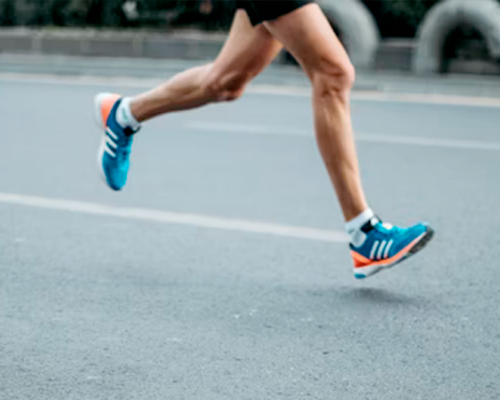
Runners with IT band syndrome can often tell you the exact mile it starts.
The first couple of miles feel fine. Then, like clockwork, a sharp pain lights up on the outside of the knee. It gets worse with every stride until you are forced to walk. Downhills are the worst. Stairs are not much better.
Cyclists know a version of it too, usually showing up after a certain amount of time in the saddle.
IT band syndrome is one of the most common causes of outside knee pain in endurance athletes, and one of the most misunderstood.
What the IT Band Is
The iliotibial band is a long, thick band of connective tissue running down the outside of your thigh, from the hip to just below the knee.
It is not a muscle. It is more like a tough strap that connects into muscles at the hip, mainly the gluteus maximus and a smaller muscle called the TFL, and helps stabilize the outside of the knee and hip as you move.
Near the knee, it passes over a bony bump on the outside of the thigh bone. That area, packed with sensitive tissue and fat, is where IT band pain usually lives.
Why It Hurts
The old explanation was that the band "rubbed" over the bone like a rope over a pulley. The more current understanding is that the band compresses the sensitive tissue underneath it, especially when the knee is bent around 20 to 30 degrees, which is exactly the angle your knee passes through as your foot hits the ground.
Repeat that thousands of times per run and the tissue gets irritated.
The bigger question is why some people get it and others do not. The answer is usually above or below the knee.
The Real Drivers
- Weak or underactive hip muscles, especially the glutes, which allow the knee to drift inward with every step
- Sudden mileage increases or a jump in long-run distance
- Lots of downhill running or running on a cambered road
- Restricted hip or pelvic mobility that changes how force travels through the leg
- Foot and ankle mechanics that alter how the leg loads
- Bike fit problems for cyclists, especially saddle height and cleat position
Why Foam Rolling the IT Band Is Not the Answer
Every runner has seen someone grimacing on a foam roller, trying to "loosen up" their IT band.
Here is the thing: the IT band is incredibly dense. Studies suggest it is not something you can meaningfully stretch or lengthen with a roller. Rolling may temporarily change how it feels, but it does not address why the tissue is irritated.
If you enjoy rolling and it helps you feel better, fine. Just do not expect it to solve the problem on its own. Rolling the glutes and outer hip muscles is often more useful than grinding directly on the band.
How SoftWave Helps
When IT band pain becomes chronic, the irritated tissue at the outside of the knee can get stuck in a cycle of inflammation and incomplete healing.
SoftWave Tissue Regeneration Technology uses broad-focused acoustic waves to stimulate the tissue at a cellular level. It is FDA cleared and non-invasive, with no needles and no downtime.
For IT band syndrome, SoftWave can help:
- Calm irritated tissue at the outside of the knee
- Improve local circulation to support repair
- Address trigger points and tension in the hip muscles that feed into the band
- Reduce pain so you can get back to the strength work that keeps it from returning
Because SoftWave treats a broad area, we can address both the knee and the hip in the same session.
Tired of cutting runs short? Schedule a SoftWave consultation online and let us find out what is really driving your knee pain.
Chiropractic: Fixing the Chain
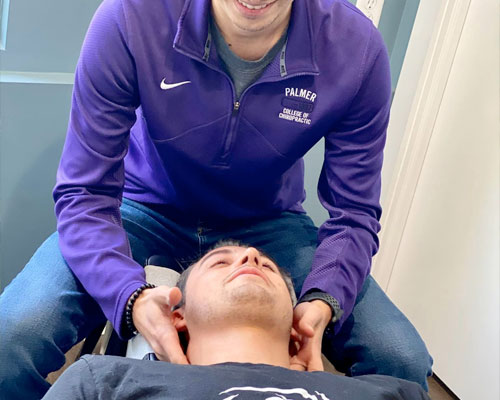
Since IT band syndrome is usually driven by what is happening at the hip, pelvis, and foot, chiropractic care is a natural partner.
We evaluate how your pelvis, hips, knees, and ankles are moving, then restore motion where it is restricted. When the hip and pelvis move well, the glutes can actually do their job, and that takes pressure off the outside of the knee.
The Strength Piece
Long-term, most runners with IT band syndrome need stronger hips. A good program usually includes:
- Side-lying and standing hip abduction
- Single-leg balance and single-leg squats with good knee control
- Glute bridges and hip thrusts
- Lateral band walks
- Step-downs that train control on the way down
We will tailor a program to your level so it complements your training rather than wiping you out.
Training Adjustments While You Recover
- Run flat routes and avoid long downhills for a few weeks
- Stop before the pain starts, even if that means shorter runs
- Switch sides of the road if you run on a cambered shoulder
- Shorten your stride slightly and increase cadence
- Cyclists, get your bike fit checked
When to Get It Checked Promptly
- Knee swelling, locking, or catching
- The knee giving way
- Pain on the inside or front of the knee rather than the outside
- Pain after a twisting injury or fall
Those suggest something other than IT band syndrome and deserve a proper evaluation.
Get Past That Mile Marker
IT band syndrome is frustrating, but it is very treatable when you address the tissue and the mechanics together.
Learn more about SoftWave at www.NaturalHealingROC.com. We help runners and cyclists across North Chili, Chili, Churchville, Spencerport, and greater Rochester get back to the miles they love.
Get a Hold of Us
If you are ready to move better, feel better, and recover faster, our team at Camarata Chiropractic & Wellness is here to help.
New Patient Scheduler Online Here!
Camarata Chiropractic & Wellness
3237 Union Street
North Chili, NY 14514
Follow Us:
Facebook: Camarata Chiropractic & Wellness
Instagram: @camarata_chiro
‹ Back
Recent Posts
-
-
-

October Unlimited Red Light Therapy Special - ONLY $299!
September 30, 2026
-

Maintenance Care: Why Feeling Good Is the Point, Not the Finish Line
September 29, 2026
-

Round Ligament Pain in Pregnancy: Sharp, Sudden and Usually Normal
September 27, 2026


 3237 Union St, North Chili, NY 14514
 (585) 617-4145