
Blog
SoftWave for Shoulder Pain and Rotator Cuff Problems: Sleep on That Side Again
Shoulder pain has a particular way of taking over your life.
You cannot sleep on that side. Reaching into the back seat is a negotiation. Putting on a jacket requires a strategy.
And washing your hair becomes a genuinely irritating daily reminder.
The shoulder is the most mobile joint in your body, and that mobility comes at the cost of stability.
When something in that system stops working properly, you notice it constantly.
What the Rotator Cuff Actually Is
People talk about the rotator cuff like it is one thing you either tore or did not.
It is actually four muscles, and their tendons, that wrap around the head of the upper arm bone and hold it centered in a very shallow socket.
Their job is control. They keep the ball positioned properly while your larger muscles do the moving.
When those tendons become irritated, degenerated, or torn, the mechanics of the whole joint change.
The ball no longer stays perfectly centered, structures start getting pinched, and the pain cycle begins.
Common Shoulder Problems We See
-
Rotator cuff tendinopathy. Degeneration and irritation of the tendons, usually from accumulated overuse rather than one event.
-
Impingement. Soft tissue getting pinched in the space beneath the tip of the shoulder blade, classically painful when reaching overhead.
-
Bursitis. Irritation of the fluid-filled cushion in the joint.
-
Partial rotator cuff tears. Very common, and frequently present in people with no symptoms at all.
-
Frozen shoulder. Progressive stiffness and loss of motion, often without a clear cause.
-
Biceps tendon irritation at the front of the shoulder.
Many people have some combination of these rather than one clean diagnosis.
Why Shoulders Heal So Poorly on Their Own
Here is the frustrating part.
Rotator cuff tendons have relatively limited blood supply, particularly in the regions where problems most often develop.
Tissue with poor blood supply heals slowly and unreliably.
Combine that with the fact that you cannot really rest a shoulder, because you use your arm for everything, and you get a problem that lingers for months or years.
The tissue gets stuck in a low-grade, unresolved state. Repair signals go quiet. Nothing progresses.
That is exactly the situation SoftWave is designed to address.
How SoftWave Approaches the Shoulder
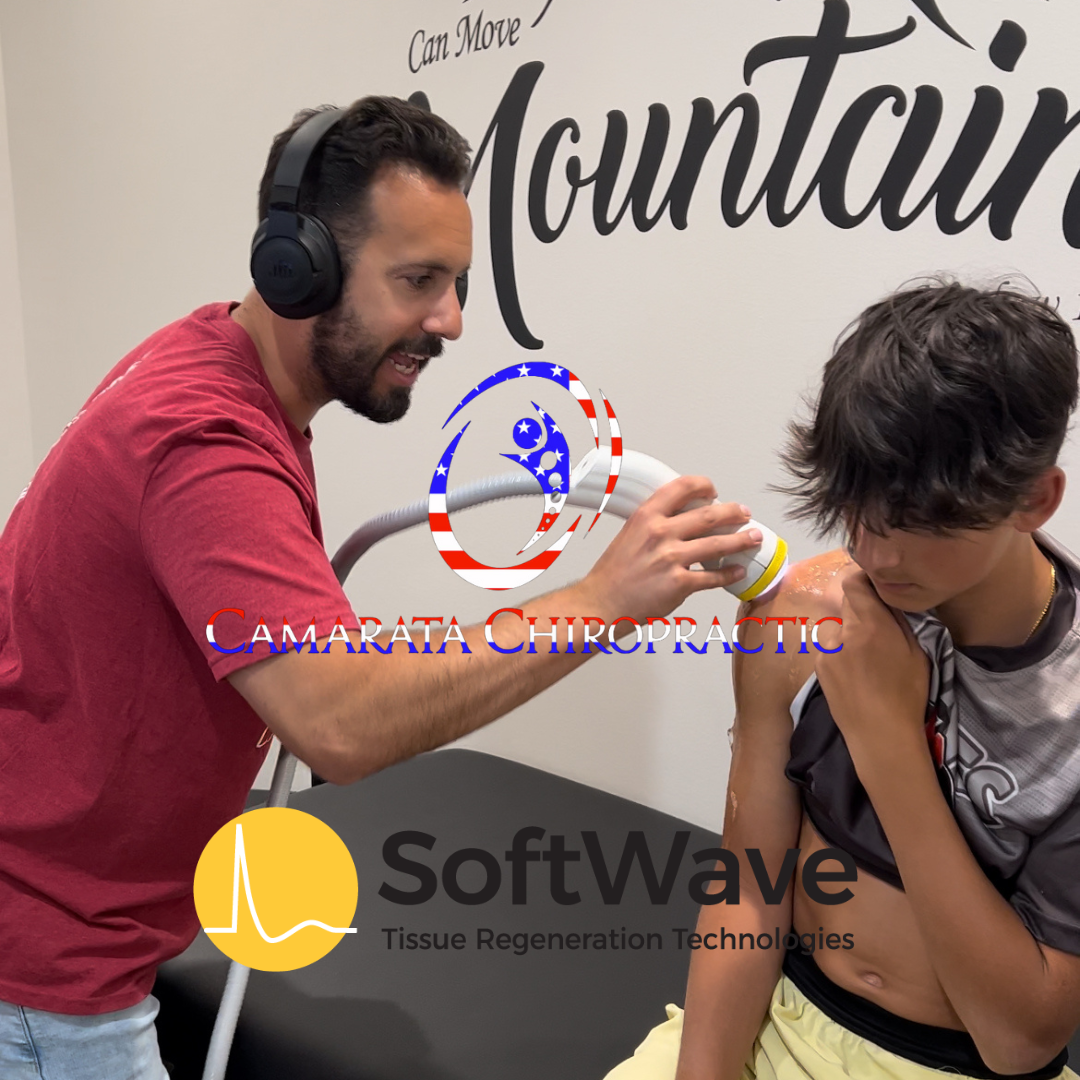
SoftWave Tissue Regeneration Technology delivers broad-focused acoustic waves into the tissue through a handheld applicator.
These are sound waves creating a mechanical signal, not heat and not electricity.
What follows in the tissue:
-
Blood flow to the treated area increases, which is especially significant in a region with naturally poor supply
-
New small blood vessels form to support the tissue
-
Inflammatory activity is encouraged toward a healthier, resolving state
-
The body is prompted to recruit its own repair cells to the site
For a tendon that has been starved of circulation and stuck for a year, that increase in blood supply alone is a meaningful change in conditions.
Ready to feel the difference? Book your appointment online here.
Why Broad Coverage Suits the Shoulder
Shoulder problems are almost never confined to one small spot.
You typically have tendon involvement, some bursal irritation, capsule tightness, and compensating tension through the surrounding muscles all at once.
Older traditional radial focused shockwave devices concentrates energy at a single narrow point and tends to be uncomfortable.
SoftWave spreads the signal across the whole region, reaching the tendons, the surrounding tissue, and the areas above and below.
The SoftWave Therapy treatment is far more tolerable.
What a Session Is Like
Gel goes on the shoulder, and the applicator moves over the treatment area from several angles.
Most patients describe a firm tapping sensation. Genuinely irritated areas often feel more pronounced, which helps confirm what we are dealing with.
Sessions are short. No needles, no numbing, no downtime.
You put your shirt back on and get on with your day.
Results build across a series of visits, because tissue repair happens on a biological schedule.
The Shoulder Blade Is Half the Problem
This is where chiropractic assessment adds real value, and where a lot of shoulder treatment falls short.
Your shoulder does not attach to your skeleton the way most joints do. It sits on the shoulder blade, which floats on your rib cage, controlled entirely by muscle.
Which means shoulder function depends on:
-
How well your shoulder blade moves and rotates
-
How mobile your mid-back is, since a stiff thoracic spine limits overhead reach directly
-
How your neck is functioning, because the nerves controlling these muscles originate there
-
Your rib mechanics and how you breathe
If your mid-back does not extend, your shoulder physically cannot reach overhead cleanly. It has to find that motion somewhere, and it finds it by jamming structures together.
Treat the tendon and ignore that, and you are treating a symptom of a mechanical problem.
So we assess the whole region, restore motion where it is restricted, and treat the damaged tissue directly.
What Helps Between Visits
-
Keep the shoulder moving within a comfortable range, because complete immobility invites stiffness and frozen shoulder
-
Temporarily reduce the specific overhead activities that flare it up
-
Work on posture, since a rounded upper back directly reduces shoulder clearance
-
Sleep with a pillow supporting the arm if side sleeping is painful
-
Strengthen the shoulder blade muscles once irritation has settled
Before You Schedule Surgery
Shoulder surgery is sometimes exactly right, particularly for significant full-thickness tears in the right candidate.
But it is worth knowing that many partial tears and degenerative tendon problems do respond to conservative care, and that recovery from shoulder surgery is long and demanding.
If you are being told to consider surgery for a chronic rotator cuff problem, it is reasonable to first explore whether a drug-free, non-surgical approach can improve things.
We will be honest with you about what we think we can and cannot help with. That is a conversation worth having before you commit to an operation.
You can learn more about our regenerative services at www.NaturalHealingROC.com.
We help patients across North Chili, Chili, Churchville, Spencerport, and the greater Rochester area get their shoulders working again.
You should be able to sleep on your own side of the bed.
Get a Hold of Us
If you are ready to move better, feel better, and recover faster, our team at Camarata Chiropractic & Wellness is here to help.
New Patient Scheduler Online Here!
Camarata Chiropractic & Wellness
3237 Union Street
North Chili, NY 14514
Follow Us:
Facebook: Camarata Chiropractic & Wellness
Instagram: @camarata_chiro
‹ Back
Recent Posts
-
-
-

October Unlimited Red Light Therapy Special - ONLY $299!
September 30, 2026
-

Maintenance Care: Why Feeling Good Is the Point, Not the Finish Line
September 29, 2026
-

Round Ligament Pain in Pregnancy: Sharp, Sudden and Usually Normal
September 27, 2026


 3237 Union St, North Chili, NY 14514
 (585) 617-4145